



How to Quit Porn Addiction in 2026: A Practical Guide That Actually Works
I’ll be honest with you upfront; most articles on this topic are written by people who’ve never actually sat with the 2 a.m. urge, closed the laptop, and felt their hands shake a little. This one is different. It’s written for the version of you who is tired. Tired of the promises to yourself, tired of the shame spiral, tired of googling “how to quit” at midnight for the fifteenth time this year.
So let’s skip the lecture. You already know porn is “bad for you”, you’ve heard that a thousand times. What you actually need is a plan that survives contact with real life: bad days, boredom, loneliness, urges from social media apps, soft-porn and that one specific hour where everything falls apart.
Why “just stop” doesn’t work
Willpower is not a muscle you can flex your way out of this with, no matter what your gym-bro cousin tells you. Compulsive porn use isn’t really about sex. It’s usually about escape from stress, from silence, from feelings you don’t want to sit with. Treat it purely as a discipline problem and you’ll white-knuckle it for a week, then relapse and feel worse than before you started.
The people who actually quit stop treating it as a battle of willpower and start treating it as a habit loop to dismantle: cue, routine, reward. Change the loop, and the urge loses its grip.

Step 1: Get specific about your triggers
Grab a notebook (an actual paper one), not your phone (we’ll get to why phones are the enemy in a second). For one week, just observe. Don’t try to change anything yet. Every time the urge shows up, jot down three things:
- What time was it?
- What had just happened (bored, stressed, rejected, lonely, tired)?
- Where were you physically?
Most people find their triggers cluster hard around two or three specific situations. Mine, back when I was working through this myself, was almost always 11 p.m., alone, scrolling with the lights off after a day where I’d avoided something uncomfortable. Yours will have its own fingerprint. You can’t defend against an enemy you haven’t identified.
Step 2: Make the first step harder, not the whole thing
This is the part nobody tells you: you don’t need superhuman self-control, you just need friction. The brain takes the path of least resistance, always. Your job is to add speed bumps between you and the behavior.
- Move your phone charger out of the bedroom
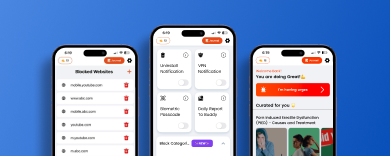
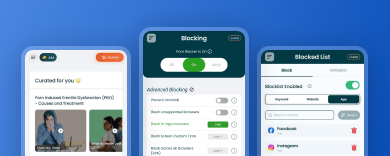
- Install a blocker at the router level, not just the browser (browser-only blockers get bypassed in about four seconds by 11 p.m. you)
- Log out of accounts and delete saved passwords for anything relevant
- Give a trusted friend admin control of the blocker password, not you
None of these “fixes” the addiction. It just buys your rational brain enough time to catch up with your impulsive brain, which is usually all you need.
Step 3: Replace the reward, don’t just remove it
Here’s where most guides fail, they tell you to remove the behavior and stop there. But your brain went looking for a reward (relief, dopamine, distraction) and now there’s a hole where that used to be. If you don’t fill it with something, you’ll fill it with the old thing again.
This doesn’t need to be dramatic. It can be embarrassingly small:
- A two-minute cold shower when the urge hits
- Ten push-ups, right where you’re standing
- Calling one specific person you’ve pre-decided you can text at odd hours
- Stepping outside, even just onto a balcony or porch, for five minutes
The goal isn’t to make the urge disappear. It’s to survive the 90 seconds it takes for the wave to crest and pass, because it always does pass, every single time, even when it feels like it won’t.
Step 4: Deal with the underlying stuff
If you keep white-knuckling this without ever asking why you reach for it, you’re just playing whack-a-mole. For a lot of guys (and yes, plenty of women too this isn’t only a “guy thing” anymore in 2026), the real driver is one of:
- Chronic loneliness or lack of real intimacy
- Undiagnosed anxiety or low-grade depression
- A habit that started as a teenager and just never got examined
- Using arousal as a numbing tool the same way someone else might use alcohol
You don’t have to solve all of this alone. A therapist who specializes in compulsive sexual behavior (yes, they exist, and yes, telehealth in 2026 makes them easy to find without ever sitting in an awkward waiting room) can help you get underneath the behavior instead of just managing the surface of it.
Step 5: Expect to slip – and build the plan for when you do
This is the part that saves most people’s recovery: deciding, in advance, what happens after a relapse. Because here’s the truth most people don’t quit in one clean line. They quit in a jagged one, with setbacks along the way.
The people who actually make it long-term aren’t the ones who never slip. They’re the ones who don’t let one bad night turn into a bad month. Write yourself a short letter now, while you’re clear-headed, to read after a slip. Something like: this doesn’t erase your progress, get back to day one of your routine tomorrow morning, not in three weeks.
Shame is the thing that turns a slip into a spiral. Not the slip itself.
What actually changes when you stick with it
Give it 60-90 days of genuinely trying, not perfect, just trying and most people report the same handful of things: sharper focus, more patience in real conversations, less anxiety around actual intimacy, and a weird but real sense of having more hours in the day. Nobody tells you how much time this habit quietly eats.
You’re not broken for struggling with this. You’re not weak, or gross, or beyond help. You’re dealing with a habit loop your brain built to cope with something and habit loops can be rebuilt. It’s slower than anyone wants it to be, and it’s absolutely doable.
Start with the notebook. Start today, even if today is already half over.
Conclusion
In conclusion, embarking on the journey of how to stop porn addiction is a deeply personal and courageous decision. It requires self-reflection, determination, and a commitment to your own well-being. Remember that change is a process, and it’s important to be patient and compassionate with yourself along the way.
Set realistic goals, seek support from trusted friends or professionals, and consider adopting healthy coping mechanisms to replace the time and energy previously spent on pornography.
Embrace self-care practices, such as exercise, mindfulness, and pursuing meaningful hobbies, to help fill the void left by pornography. Remember that relapses may happen, but they do not define your progress. Each setback can serve as an opportunity for growth and learning.
Stay focused on your goals, celebrate small victories, and believe in rewiring your brain with sheer dedication and you can easily overcome this challenge. With dedication and perseverance, you can reclaim control over your life, restore healthy relationships, and cultivate a fulfilling future free from the grip of pornography.
How to Quit Porn Addiction in 2026: FAQs
Q1. What is the main cause of pornographic addiction?
Ans. Pornographic content is now readily accessible at our fingertips which is the main cause of pornographic addiction.
Q2. What does excessive use of porn use cause?
Ans. Lethargy and lack of motivation, Chronic release dysfunction, Declining interest in a real partner, etc.
Q3. How does porn affect the brain?
As. Porn consumption has always negatively impacted the human brain. It alters the reward circuits in the brain from a chemical and structural standpoint.
Q4. What are some effective coping mechanisms to help quit porn addiction?
Ans. Well, besides cutting the contact with access to porn effective strategies include engaging in hobbies, practicing mindfulness, seeking support from mental health professionals, and finding healthy outlets for stress and emotions.
Q5. What is mindful meditation?
Ans. Mindful meditation is a technique with a strong body of evidence and research to back its effectiveness.
Q6. Can porn addiction be treated?
Ans. Yes, there are possible porn addiction treatment options. Moreover, this typically involves a combination of therapy, seeking help from any support group, and undertaking self-help strategies. Cognitive behavioral therapy (therapy CBT) and mindfulness techniques are often used to help individuals regain control over their behaviors and address underlying issues.





Comments are closed.