
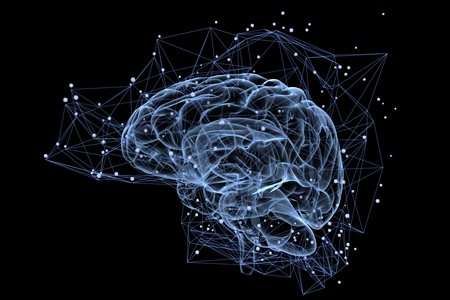
Your Brain on Porn: What’s Actually Happening Up There (And Why It’s Not About Willpower)
You’ve probably had this thought at 2 a.m.: why does this feel so much harder to stop than it should? You close the tab, you promise yourself that was the last time, and somehow you’re back within days. If that cycle sounds familiar, you’re not weak, and you’re not broken. You’re dealing with actual brain chemistry and once you understand what’s happening under the hood, the whole thing stops feeling like a mystery and starts feeling like something you can actually work with.
Let’s get into it.
This isn’t a fringe problem anymore, it’s basically infrastructure
Somewhere along the way, porn stopped being something people occasionally stumbled into and became something baked into the daily internet experience, one tap away on every device, algorithmically pushed, impossible to fully avoid even if you’re not looking for it. Research consistently finds that a huge share of men aged 18-39 engage with porn weekly, and the number for women, while lower, has been climbing steadily too. This isn’t a “some people” issue. It’s a “most people, to some degree” issue, which is exactly why understanding the brain science matters for basically everyone, not just people who think they have a “problem.”
The part your brain actually struggles with isn’t pleasure, it’s the brakes
Here’s the thing almost nobody explains clearly: the issue isn’t that porn feels good. Feeling good isn’t the malfunction. The malfunction is what it does to your brakes, your brain’s ability to say “okay, that’s enough” and actually mean it.
Neuroscientists studying this describe it as a hit to the brain’s self-regulation system, the same system that gets compromised in other behavioral addictions. And to be upfront about the state of the science: porn addiction isn’t yet formally recognized as a standalone clinical diagnosis the way, say, alcohol use disorder is. Researchers are still building the case, largely by drawing parallels to conditions that are recognized, like internet gaming disorder, which made it into diagnostic manuals a few years back. But the overlap in what’s happening in the brain is hard to ignore.
Meet the dopamine system, the actual main character here
Deep in your brain is a circuit called the mesolimbic pathway. Think of it as your internal hype machine, a network of neurons that release dopamine whenever something pleasurable happens, whether that’s food, a workout high, a great song, sex, or masturbation.
Here’s the twist that explains almost everything about why compulsive habits are so sticky: dopamine doesn’t just show up during the reward. It ramps up in anticipation of it. The second your brain expects something pleasurable is coming, dopamine is already firing which is the actual biological definition of craving. It’s not you being “weak-willed” when you feel the pull before you’ve even opened an app. That’s your neurochemistry running exactly as designed, just aimed at something that keeps hijacking it.
And because the brain is a relentless pattern-matcher, repeated exposure teaches it to expect that specific reward over slower, more ordinary ones, a walk outside, a conversation, finishing a task. Compared to an instant, high-intensity dopamine hit, those things start to feel dull by comparison. Not because they stopped being good, but because your baseline got recalibrated.
The other half of the story: your brain’s control center taking hits
The second piece of this puzzle lives in the prefrontal cortex — the part of your brain behind your forehead responsible for judgment, impulse control, planning, and basically everything that makes you you instead of pure impulse.
Research on addictive behavior, porn included, points to a two-way relationship between heavy use and prefrontal function that becomes a genuinely brutal loop: repeated compulsive use is linked to reduced grey matter and function in this region, and a weaker prefrontal cortex makes it harder to control the very behavior that’s wearing it down. It’s not one-directional. It’s a feedback loop that reinforces itself.
Clinicians see the fallout of this pattern show up as difficulty concentrating, impulsivity, trouble regulating emotions, and impaired decision-making, the same signature you’d see in other addictive patterns, just wearing a different outfit.
Okay but… can you actually undo this?
Yes. This is the part that gets buried at the bottom of most articles, and it shouldn’t be, because it’s the actual point: the same neuroplasticity that made this loop possible is exactly what lets you rebuild something healthier. Brains are not static. They adapt to what you repeatedly do — which cuts both ways, and the “both ways” part is good news.
Here’s a realistic approach, not a fantasy “just stop” plan:
Set an actual goal, not a vague intention.
“I’ll try to cut back” rarely survives contact with a bad day. A specific, trackable target, paired with a tool that adds friction, like a content blocker, gives your prefrontal cortex something concrete to lean on while it’s rebuilding strength.
Don’t go it alone if you don’t have to.
A few sessions with a therapist who understands compulsive behavior can shortcut months of trial and error. This isn’t a sign of failure, it’s the single fastest way people actually recover.
Rebuild your reward map on purpose.
Make a real list of things that used to light you up before this became your default escape hatch. It’s extremely common to feel like nothing else interests you anymore during this phase, that’s the recalibrated baseline talking, not the truth about who you are.
Start absurdly small.
If your focus is shot (very common early in this process), don’t plan a two-hour deep-work block on day one. Try ten-minute stretches with real breaks in between. Cap it around thirty total minutes of intentional activity at first. You’re not being lazy, you’re retraining a system that’s genuinely out of practice.
Expect the new habit to feel boring before it feels good.
This is the part nobody warns you about. A slower, healthier dopamine source takes time to feel rewarding again after your baseline got used to instant, high-intensity hits. Stick with it past the boring phase, that’s usually right before it starts clicking.
The real takeaway
None of this is about shame, and it was never a character flaw to begin with. It’s a wiring problem, and wiring problems have wiring solutions. Understanding why the pull feels so strong is what makes it possible to work with your brain instead of white-knuckling against it — and that shift alone tends to make the whole process feel less like a fight and more like something you’re actually capable of winning.