
Does Age Verification Help Overcome Porn Addiction?
In this article
- What age verification can and cannot do
- Understanding “porn addiction”
- What supports behaviour change?
- When to access professional support
- Does age verification overcome porn addiction?
Does age verification assist in overcoming porn addiction? This article examines porn addiction age verification, compulsive pornography use, and the different sources of support that may help people change their behaviour.
Age verification can help limit children’s access to certain sites. However, it is not enough on its own to help adults overcome pornography-related problems.
Age verification controls access to a service. It does not address the behaviours, emotions, situations, or mental health concerns that may contribute to compulsive pornography use.
Age restrictions and behaviour interventions serve different purposes. While age verification may restrict access, behaviour interventions focus on changing habits and managing underlying issues.
More research is needed on age verification and effective behaviour interventions for problematic pornography use. However, approaches such as cognitive behavioural therapy (CBT) and acceptance and commitment therapy (ACT) have shown some positive outcomes.
Porn Addiction Age Verification: What Age Checks Can and Cannot Do
Age checks and behaviour support work at different levels. Age verification restricts access to websites, while therapy and coping strategies help address triggers, emotions, and behaviour change goals.
Access control: Age checks may limit access to a particular service.
Behaviour support: Therapy, coping strategies, and behavioural interventions can help people address habits and work toward personal goals.
Age verification and treatment address different needs: access control and behaviour change.
Age verification, also called age assurance, is a process organisations use to determine whether someone meets a required age. This may involve checking an individual’s identity or estimating their age.
The purpose is to prevent people below a specified age from accessing age-restricted material.
Age verification can control access to services. Behaviour interventions, however, focus on behaviour, emotions, and personal objectives.
The question of porn addiction age verification is whether an access barrier can help an adult change a habit. An access barrier alone does not provide treatment or address the underlying behaviour.
Understanding “Porn Addiction”
The term porn addiction is often used to describe a loss of control, repeated unsuccessful attempts to stop, or pornography use that continues despite negative consequences.
Although the term may help describe someone’s experience, it is not a recognised diagnostic label. Pornography consumption alone is not enough to determine whether someone has a clinical condition.
Compulsive sexual behaviour disorder (CSBD) is recognised in the World Health Organization’s ICD-11 classification under impulse control disorders.
CSBD involves difficulty controlling intense sexual impulses or urges, resulting in repetitive behaviour and significant distress or negative consequences.
A qualified professional should assess all relevant factors. Strong sexual interests or emotional distress caused by moral concerns alone do not necessarily indicate CSBD.
Professionals may examine:
- Repeated difficulty controlling pornography-related behaviour
- Unsuccessful attempts to reduce or change behaviour
- Negative effects on relationships
- Problems affecting work or finances
- Disrupted sleep or health
- Triggers and consequences associated with the behaviour
- Possible underlying anxiety, depression, loneliness, or trauma
It is not always necessary to prove that someone is “addicted” to seek help. If a behaviour conflicts with personal goals or causes emotional distress, support can help individuals understand their habits and decide what they want to change.
What Supports Behaviour Change?
There is no single solution that works for everyone. A systematic review of behaviour interventions found positive outcomes from psychological interventions, particularly CBT-based approaches.
However, the available evidence remains limited. Another systematic review identified limitations, including small study sizes and potential bias.
Support can be helpful, but it is still uncertain which behaviour intervention works best for every individual. The following six steps may help people develop a more practical approach to behaviour change.
Six steps that may support behaviour change:
- Define personal objectives
- Recognise triggers
- Adjust routines and surroundings
- Learn to manage urges
- Consider professional support
- Use voluntary accountability and support
These strategies can be combined and adjusted according to an individual’s needs and goals.
1. Define Objectives
People may want to stop, reduce, or modify a behaviour. Others may wish to avoid specific situations or regain a sense of control.
Setting clear and personally meaningful objectives can support behaviour change. It may also help prevent people from viewing every setback as a complete failure.
Think about what you want to change and why. For example:
- “I want to avoid watching pornography when I cannot sleep.”
- “I want to feel more in control and be more present in my relationship.”
Goals should reflect personal values and support wellbeing. They should not be driven solely by guilt or external pressure.
2. Recognise Behaviour and Antecedents
For one or two weeks, observe and record when pornography-related behaviour occurs. Note the events, situations, and emotions that come before it.
Common triggers may include:
- Boredom
- Stress
- Loneliness
- Being alone with a device late at night
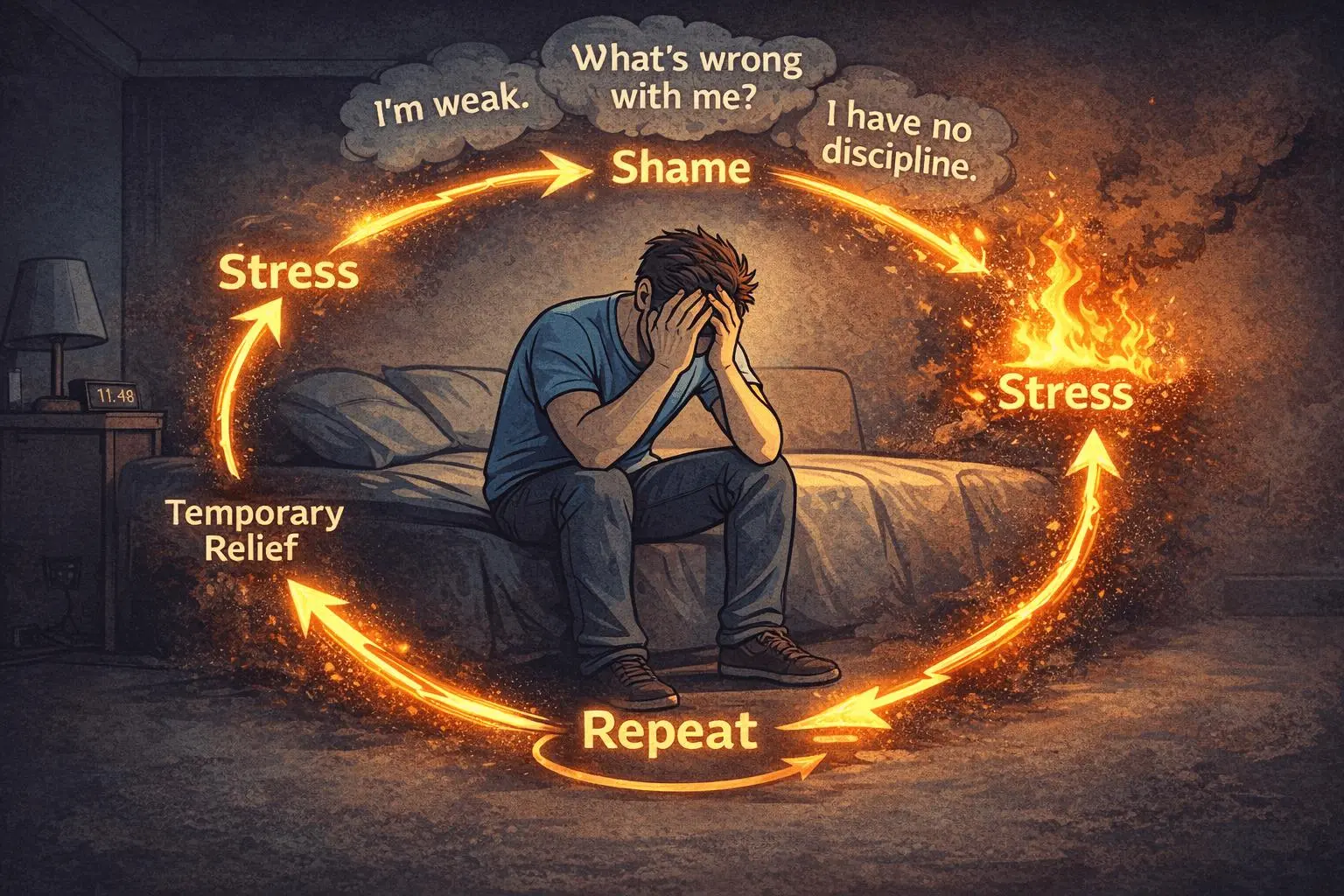
Instead of criticising yourself, focus on recognising patterns. Understanding your triggers can help you identify opportunities to choose alternative behaviours.
3. Alter Your Surroundings and Behaviour
Changing your environment can make behaviour change easier. Some practical strategies include:
- Keeping your mobile phone outside the bedroom
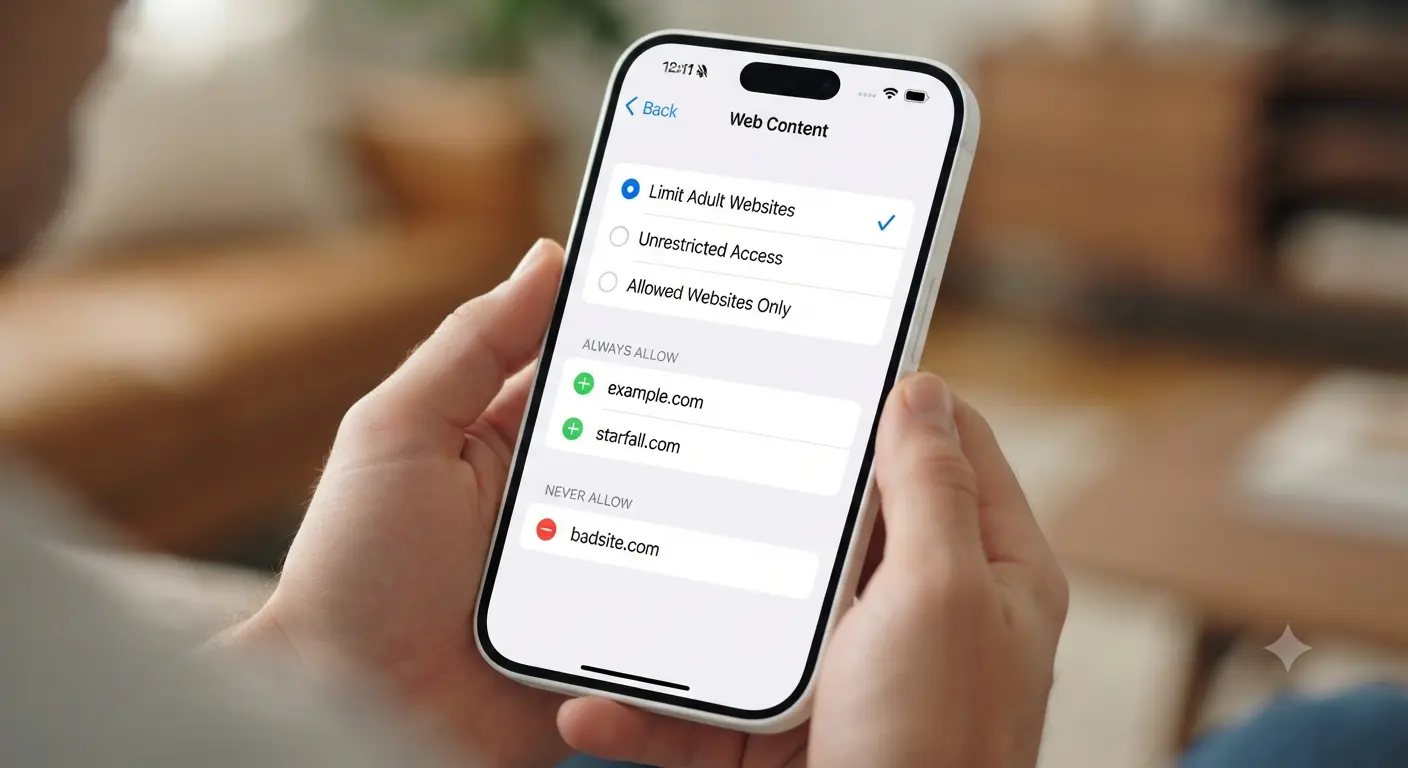
- Using website and app blockers
- Avoiding private browsing in high-risk situations
- Planning activities during vulnerable periods
- Creating a consistent daily routine
These strategies can create barriers to unwanted behaviour. However, they should be viewed as supplementary support rather than a replacement for professional help when it is needed.
Try to choose alternative activities that address the underlying reason for the behaviour.
If loneliness is a trigger, consider spending time with others. If stress is a trigger, try walking, showering, deep breathing, or other calming activities.
Simple activities that are easy to start may make behaviour change more manageable.
For related guidance, read BlockerX’s article about porn urges when bored, stressed, or lonely. You can also explore BlockerX’s guide to quitting porn addiction.
4. Accept and Manage Behaviour Prompts
Some behaviour interventions teach individuals to recognise urges without immediately acting on them. This involves noticing thoughts and feelings, allowing them to pass, and choosing a response.
Acceptance and commitment therapy (ACT) helps people create space for difficult thoughts and emotions while continuing to act in ways that align with their personal values.
In a small randomised controlled trial, adults who completed a 12-session ACT intervention experienced greater reductions in pornography consumption than a waitlisted control group.
Although the findings are encouraging, the trial was limited in size and diversity. It cannot establish that ACT will work equally well for everyone. Further details are available in the published trial record.
5. Access CBT or Another Suitable Behaviour Intervention
Professional support can help individuals understand their behaviour, thoughts, emotions, and triggers. Therapists may also help develop alternative behaviours and strategies for managing setbacks.
Therapy may also address other concerns, including:
- Anxiety
- Depression
- Relationship difficulties
- Trauma
- Stress management
A qualified mental health professional can recommend a suitable behaviour intervention based on an individual’s needs.
Look for a qualified or registered professional with experience in compulsive sexual behaviour disorder (CSBD) or problematic pornography use.
Support should be non-judgmental and free from shame or moral pressure. Ask how the professional will assess progress, what treatment approach they use, and how they will respect your goals.
6. Employ Support and Supervision Effectively
Many people find support from a trusted friend, partner, peer group, or professional helpful. Accountability can provide encouragement and help individuals stay connected to their behaviour change goals.
Support should always be respectful and voluntary. Surveillance, shame, and coercion may increase stress and encourage secrecy instead of helping people develop lasting behaviour control.
If a partner is involved, agree on boundaries and confidentiality together. A partner can offer support but should not be expected to act as a therapist or police another adult’s behaviour.
Couples counselling may also help when pornography use has affected trust, communication, or emotional closeness within a relationship.

When to Access Professional Support?
Consider consulting a doctor or mental health professional if you frequently feel unable to control pornography use, or if it is affecting your life, relationships, or wellbeing.
Professional support may also be helpful when:
- Behaviour continues despite serious consequences
- Repeated attempts to change have been unsuccessful
- Pornography use is affecting work or relationships
- You experience emotional distress
- Other mental health concerns may be involved
Professionals can assess your situation and discuss appropriate options. Never start or stop medication without medical guidance.
If you believe you or someone else is at immediate risk of self-harm or harm to others, contact local emergency or crisis services.
Porn Addiction Age Verification: Does It Help Adults Quit?
No. Age verification can restrict access to age-restricted services, particularly to protect children. However, there is currently no evidence that age verification alone can overcome compulsive pornography use or help adults quit porn.
Behaviour change may be better supported by a combination of practical and psychological strategies, including:
- Setting clear and realistic objectives
- Recognising behaviour patterns and triggers
- Changing routines and surroundings
- Learning to manage urges
- Seeking suitable support
- Exploring CBT or ACT with a qualified professional
It is not necessary to be perfect throughout the behaviour change process. If a relapse occurs, use it as an opportunity to understand the triggers and circumstances involved.
Consider what could help you manage similar situations in the future. The goal is to gradually improve behaviour control and wellbeing.
Note: This article provides general information only. It is not a diagnostic tool or a replacement for individual medical advice.
Research and References
- Ofcom: Report on the Use of Age Assurance
- World Health Organization: ICD-11
- Systematic Review of Treatments for CSBD and Problematic Pornography Use
- Systematic Review of Treatment Approaches for Problematic Pornography Use
- Randomised Trial of ACT for Problematic Internet Pornography Use
“`