Porn and Depression: Can Porn Affect Your Mental Health?
Porn and Depression: Can Porn Affect Your Mental Health?

Link between pornography and depression
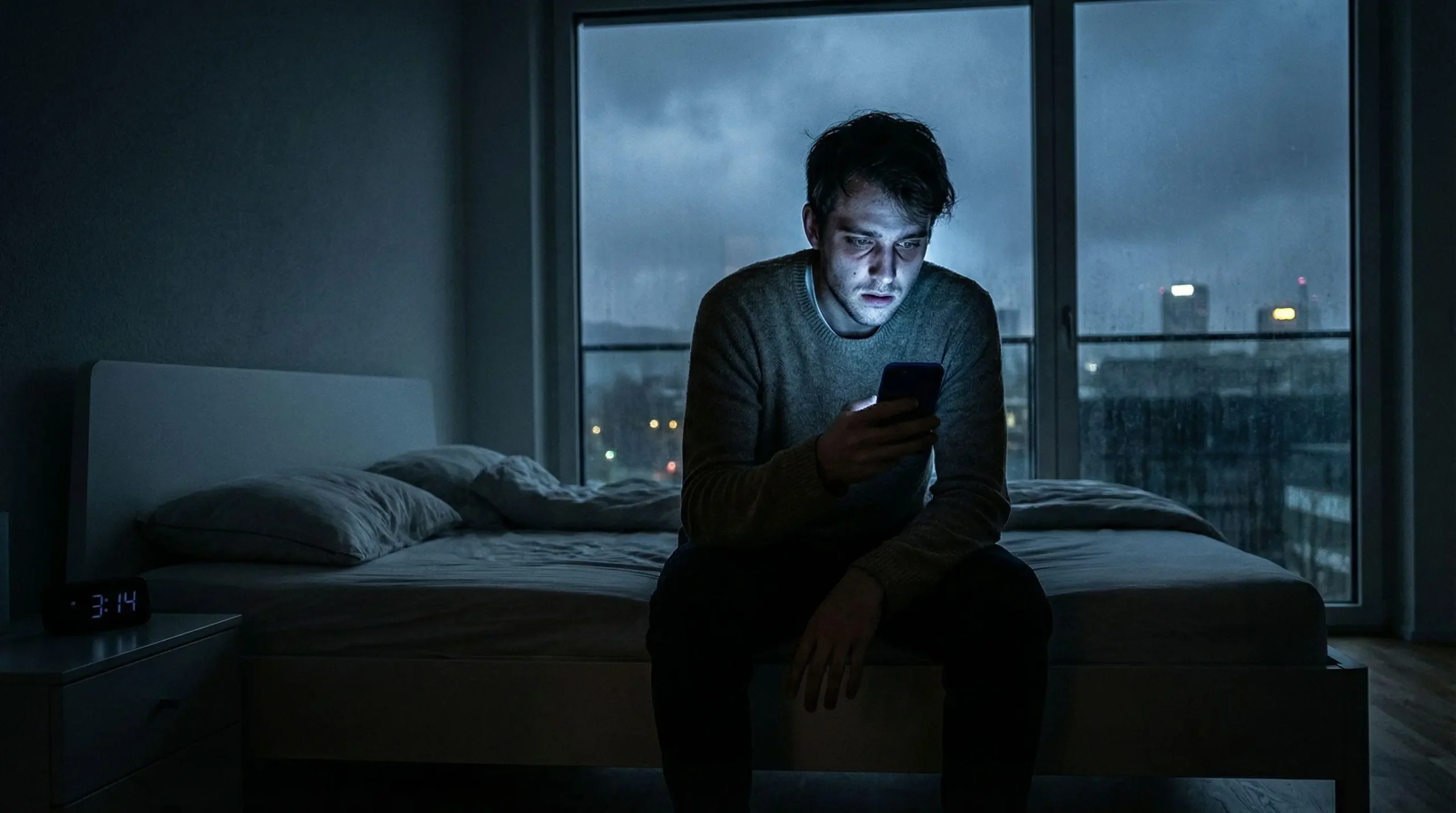
The link between porn and depression can vary between individuals, and understanding this relationship means looking at your mood, habits and circumstances. Sometimes you may notice that you feel a particular way (for example less motivated, less confident, low in mood) after viewing pornography. You may find that you feel a particular way (for example less motivated, less confident, low in mood) after viewing pornography. Alternatively, you may turn to pornography as you are feeling depressed, lonely, stressed or overwhelmed in general.
If you are using pornography to help you feel better, but after using it feel worse, you may be feeling:
- Low in motivation
- Guilt
- Emotionally exhausted
- Frustrated with yourself for continuing to engage in the behaviour despite wanting to reduce it.
Porn and Depression: Does Pornography Cause Depression?
Whether porn and depression are connected for you can depend on why you are using pornography, the impact that it is having in your life, whether you are in control of your behaviour and what else is going on in your life. In general, research shows that there can be a link between problematic pornography use and psychological distress, including depression. However, this does not always mean that pornography is causing depression.
Possible reasons for a link between pornography and depression
- You may engage in pornography occasionally and not feel any negative effects on your mental health.
- You may engage in pornography as you are feeling low, lonely, stressed or emotionally numb.
- You may be feeling depressed or distressed as pornography is impacting on important areas of your life, such as responsibilities, sleep, relationships and/or goals.
- You may be struggling with porn addiction and feel that you are unable to stop, despite wanting to.
- Other factors, such as high levels of anxiety, loneliness, low self-worth, relationship issues and existing mental health issues may mean that you are engaging in problematic pornography use and experiencing depression.
A 2024 systematic review found that it was unclear how problematic pornography use and mental health were related. However, factors such as feelings of loneliness, anxiety and self-worth may help to explain why people may be struggling.
It is important to note that not everyone who engages in pornography will experience depression. And not everyone with depression engages in pornography.
Research: Problematic Pornography Use and Mental Health: A Systematic Review
Why do people engage in pornography when they are feeling depressed?
When feeling depressed, engaging in everyday activities can be difficult. You may lack motivation, finding it hard to concentrate, or finding less enjoyment in activities. Engaging in pornography may be an easy way to feel different during this time.
1. Temporary relief of low mood
If you are feeling down, engaging in tasks such as getting out of bed, completing tasks, exercising and seeing friends may be very tiring. As pornography can be accessed quickly, with no planning, no travel and with no interaction, it may be an easy option to engage in. For some people it can be a quick distraction from negative feelings/thoughts.
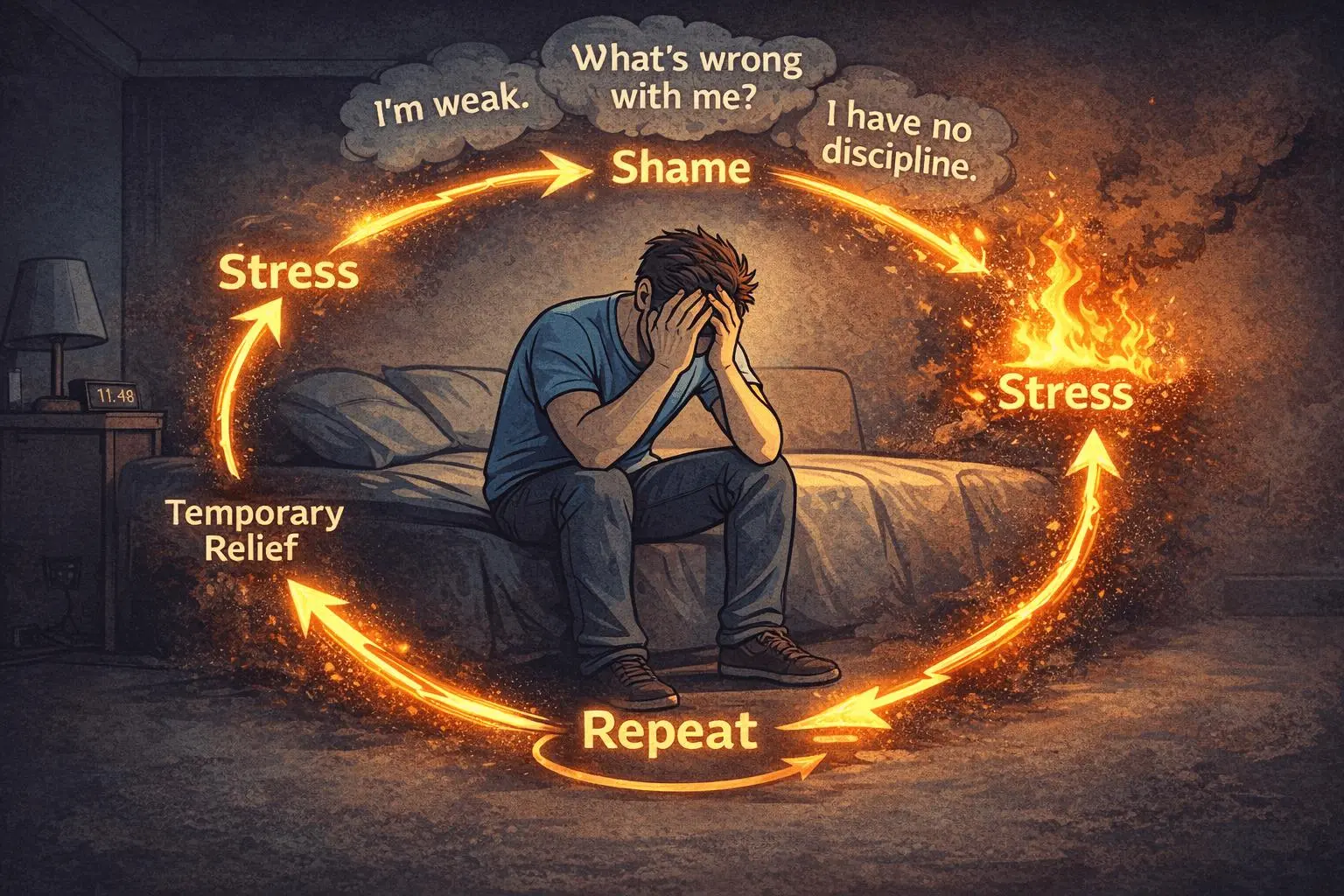
If you are feeling sad, empty, bored, or emotionally tired, engaging in pornography can provide temporary relief. However, it may not be helping with the underlying issue(s) leading to you feeling this way. If you are repeatedly using pornography as a way to avoid difficult feelings, you may begin to use it whenever you are feeling uncomfortable.
2. Less enjoyment in activities due to depression
Depression can make it harder to get enjoyment from activities. You may struggle to get enjoyment from hobbies, socialising, exercise, or spending time outdoors. Things that you used to enjoy may now not seem as enjoyable, and may instead seem monotonous or pointless.
As pornography provides quick stimulation, it may be a more appealing option if you are struggling to get enjoyment from other activities. However, if you are significantly increasing your pornography use, and reducing other activities you may find it difficult to gain balance in your routine. Trying to slowly begin to engage in positive activities to benefit your mental health may be helpful, even if you are not very motivated.
3. Using pornography to avoid loneliness
Feeling depressed can make you feel very isolated. You may begin to avoid social interactions, stop replying to messages, or feel distanced from your friends and family. Sometimes, despite wanting to be with people, you may simply not have the energy to engage with people.
Engaging in pornography may be a way to pass the time or avoid feeling lonely in this instance. However, it is not a genuine option to feel connected. If you are primarily relying on pornography to avoid feelings of loneliness, you may begin to spend more time on your own, and avoid connecting with people. Even small amounts of social engagement can be beneficial if loneliness is impacting your mood. Something as simple as a short conversation, or meeting a friend could be useful.
4. Automatic behaviour
In some instances you may begin engaging in pornography without really meaning to.
For example, waking up feeling low in mood and scrolling through social media. Seeing explicit content and beginning to watch pornography. Having a stressful day at work, and returning home. Lying in bed and automatically opening pornography.
You may be engaging in pornography without even thinking, therefore it is becoming habitual. Over time, you may associate engaging in pornography with certain feelings or situations. If you are feeling bored, stressed, lonely or down, your brain may automatically associate this with pornography. Understanding these links may help to identify if pornography is becoming habitual.
Can pornography worsen depression?
For some people, problematic pornography use may be contributing to negative feelings. The relationship between porn and depression deserves a careful, individual look rather than assuming the same explanation applies to everyone. However, it may depend on your situation, behaviour, mood, and how pornography is affecting your life.
1. Guilt
If you are repeatedly trying to reduce or stop pornography use, but continuing to engage in it, you may feel frustrated with yourself. You may be thinking:
- “Why did I just do this?”
- “I said I wasn’t going to.”
- “I’ve wasted so much time.”
- “I can’t control myself.”
This may leave you feeling guilty, ashamed and hard on yourself. For some people, this cycle is part of the wider porn and depression experience, although it is not universal. If you are feeling down in general, being hard on yourself may worsen your mood. Instead of viewing setbacks as signs that you “can’t change” it can be helpful to reflect on why you engaged in pornography. Knowing the trigger may mean that next time you can change your response.
2. Impacting daily activities
If you are spending large amounts of time engaging in pornography, it may be impacting other areas of your life. You may be staying up late, putting work or studying off, avoiding exercise, or losing interest in hobbies. As a result of this, you may begin to feel very overwhelmed, stressed or disappointed.
You may also lose confidence in yourself, as you may be feeling that you are not making progress in your life. If pornography is impacting on your daily activities, changing this behaviour may help you to get back into a good routine, and reduce some of the stress contributing to your low mood. This is one way the porn and depression connection may feel personally relevant.
3. Relationship problems
Sometimes problematic pornography use can cause issues in a relationship. You may be avoiding spending time with your partner, losing interest in being intimate with them, or hiding the fact that you are watching pornography. Alternatively, you may begin to distance yourself.
If this causes conflict, secrecy, and a loss of trust within the relationship, further stress and negative feelings may occur. However, issues in relationships can also contribute to depression and problematic pornography. It is important to consider the situation in the relationship, as it may be an interaction between issues in the relationship and pornography.
4. As a coping mechanism
If pornography is being used as a primary coping mechanism, you may struggle to manage difficult emotions without it. Whenever you are feeling anxious, frustrated, lonely, bored or sad, you may automatically turn to pornography. This may mean that you struggle to develop other coping mechanisms for difficult situations.
Developing alternative coping mechanisms may be helpful. These can include physical activity, talking to someone, journaling, relaxing or stepping away from your environment. Although it may not be possible to avoid uncomfortable feelings, it can be encouraging to realise that you can cope with difficult emotions without turning to pornography.
Research on pornography and depression
Mixed results have been found in research on porn and depression. Some researchers also consider whether the direction of this relationship may differ between people. Researchers continue to explore how mood, context and problematic patterns may influence this connection. Some research has found links between problematic pornography use and depression symptoms. However, other research suggests that this can be dependent on individual factors, and other psychological factors.
A systematic review found that 20 studies were analysed to investigate the link between problematic pornography use and mental health. It was noted that factors such as anxiety, loneliness, self-worth, and other factors may be influencing this relationship.
More recent research has investigated if symptoms of depression and anxiety can predict pornography use. A prospective study involving 1,864 young people investigated the relationship between symptoms of depression and anxiety and frequency of pornography use at 6 months. Prospective studies are useful for seeing how different factors interact over time.
However, even this type of research does not necessarily prove that pornography causes depression, or vice versa. It appears that the impact of mental health and pornography use can be different in different people.
Research: Prospective Association of Symptoms of Depression and Anxiety with Pornography Viewing Frequency Among Young Adults · Problematic Pornography Use and Mental Health: A Systematic Review
Signs that pornography is negatively impacting mental health
If you are experiencing the following, you may be experiencing problematic pornography use:
- Finding it difficult to reduce or stop pornography use.
- Using pornography to avoid negative feelings most of the time.
- Feeling worse about yourself after pornography.
- Pornography is impacting sleep, work, studies or relationships.
- Spending more time on pornography than intended.
- Losing interest in other activities.
- Feeling more isolated.
- Continuing to use pornography despite knowing that it is having a negative effect.
Frequent pornography use does not automatically mean that you have an addiction/mental health problem. It is more important to consider how pornography is impacting your life, whether you have control over the behaviour, and whether it is causing distress or impairment. If you are experiencing ongoing depression, it is important to know that there may be many factors contributing to it and professional support may be required.
Ways to reduce pornography use if you are feeling depressed
If you find that you are turning to pornography when feeling down, it may help to address both the pornography and the feeling. Recognising your own porn and depression pattern can be a useful first step.
1. Be aware of what feelings are driving behaviour
Be aware of what feelings you have when engaging in pornography. Are you feeling lonely, bored, stressed, sad, anxious or emotionally numb? Try noting what emotions you are feeling just before engaging in pornography to see if there are patterns.
For example, if you tend to engage in pornography after a difficult day, you could plan to do a different activity at this time. Try going for a short walk, cooking, speaking to a friend or listening to music. Being aware of what is triggering your pornography use may help you change your response.
2. Don’t rely on willpower
If pornography is easy to access on your phone/laptop, it can be easy to give in to the urge to watch it when feeling low. Make it harder to access pornography by:
- Blocking sites.
- Removing saved links/bookmarks.
- Unfollowing triggering accounts.
- Avoid leaving your phone in your bedroom.
- Avoid browsing when you are in a vulnerable emotional state.
This gives you more time to consider whether you really want to engage in pornography.
3. Do small activities
If you are feeling depressed, it can be difficult to get started on activities. You may want to go for a run, get outside, speak to someone or make progress on something important, however you just may not feel able to.
To get started, try doing small activities. Try:
- Going for a short 10 minute walk.
- Getting showered and dressed.
- Cooking something simple.
- Tidying a small area.
- Sending a message to a friend.
- Going outside for a few minutes.
You don’t have to be super productive or change your whole routine! Doing small activities can help you begin to get back into your day.
4. Identify healthier coping mechanisms
If you use pornography as a coping mechanism for stress, sadness, loneliness or anxiety, it may help to identify healthier coping mechanisms. Try activities that relax you, or make you feel differently. This can include; physical activity, listening to music, journaling, socialising with friends, mindfulness and taking a break from screens.
Everyone finds different things helpful. Try different things to figure out what helps you feel better.
5. Get support
If depression is affecting how you are able to function in your daily life, it may be helpful to get support from a mental health professional. They may be able to help you understand what is causing your depression, how to cope with it and manage difficult behaviours.
If you are experiencing compulsive pornography use, or it is causing significant issues, it is okay to talk to a qualified professional. There is nothing to be embarrassed about!
When to get support
If you have been feeling consistently down, hopeless, empty or like you have no interest in activities that you would usually enjoy, it may be helpful to get support. Depression can affect your sleep, appetite, energy levels, concentration, motivation, relationships and daily functioning.
If pornography use is also difficult to control, and is causing issues and/or distress in your life, a mental health professional can help you understand these issues. You don’t have to be extremely severely affected to get support.
If you are having suicidal thoughts, or feel unsafe, please contact local emergency services, or a crisis support service immediately.
Related BlockerX guides
Top tips
While there may be a link between pornography and depression, this can vary between people. You may be engaging in pornography due to feeling depressed, or may be finding that problematic pornography use is causing you to feel guilty, isolated, low in motivation or distressed.
Rather than immediately blaming pornography for your depression, think about what is happening in your life, and why you may be turning to it. Looking at your own porn and depression pattern can be more useful than assuming one simple cause. If you are struggling, don’t be hard on yourself. Making small changes to your habits, developing healthier coping strategies, getting back into activities and getting support may help you begin to feel better.
Whatever the reason for your mental health issues, it is important that you get support.
Further reading