
ADHD and Porn Addiction: Is Impulsivity Making It Harder to Stop?
ADHD and Porn Addiction: Impulsivity, Triggers and How to Stop
ADHD and Porn Addiction: Is Impulsivity Making It Harder to Stop?

In this article
- Why may people with ADHD struggle to stop watching porn?
- ADHD and porn addiction
- 8. Tips to stop watching pornography if you have ADHD
- 9. Can ADHD medications help with porn addiction?
- 10. When should I see a professional?
- FAQs
ADHD and porn addiction are sometimes discussed together because impulsivity, boredom, attention difficulties and intense emotions may affect habits for some people. ADHD alone does not mean someone will develop problematic pornography use.
Why may people with ADHD struggle to stop watching porn?
People with ADHD may struggle with impulsive behaviour. In turn, you may struggle to start tasks, get distracted easily, and/or have difficulty resisting pleasurable stimuli in the moment.
For some people, this can lead to issues with pornography.
You may intend not to watch pornography, however, after a chain of thoughts, you begin to browse and end up watching pornography. Once finished, you may feel frustrated with yourself, as you intended not to.
For people with ADHD, this may be particularly difficult due to impulsivity, boredom, intense emotions, difficulties with attention, or a need for stimulation.
Not everyone with ADHD will have issues with pornography, and not everyone with issues with pornography has ADHD.
Understanding why issues with pornography may arise for people with ADHD can help you to develop coping strategies and understand your triggers. This can help reduce self-criticism.
ADHD and Porn Addiction
As well as difficulties with attention, people with ADHD may struggle with impulsivity, organisation and (in some cases) emotional regulation. This can impact many areas within someone’s life, including habits, relationships, decision making and responding to instant gratification.
Because pornography provides instant stimulation with very little effort, people may be tempted to watch it to help change how they feel – this may be due to feeling bored, fidgety, stressed, lonely or wanting to escape.
For some people with ADHD, this can lead to difficulty resisting pornography.
Studies have looked into the link between symptoms of ADHD, hypersexuality and problematic pornography use. It was found that symptoms of ADHD were linked to hypersexuality and problematic pornography use. However, these links were different in men and women. Therefore, not everyone with ADHD will have the same relationship with pornography.
It is important to note that this research only shows associations between ADHD and problematic pornography use. There are many factors which influence pornography use and ADHD is just one possible factor.
1. Difficulty stopping impulsive behaviour
Impulsivity is a common challenge for people with ADHD. People may act on impulses without considering the best course of action.
Making unplanned purchases.
Interrupting someone in conversation.
Checking your phone when you didn’t intend to.
Changing tasks regularly without completing tasks.
Acting on an impulse as it is uncomfortable to wait.
In relation to pornography, you may act on an impulse without meaning to.
Even if you didn’t intend to watch pornography, after a quick search, viewing a suggestive post, or a sudden thought or curiosity, you may be overcome with a strong impulse. As a result, you may give in to the impulse without considering your actions.
Once done, you may be left wondering why you gave in even though you had decided not to.
Impulsiveness does not mean you lack will power or the ability to make good decisions. It can simply mean that in certain situations, it is more challenging to resist certain impulses and delay instant gratification.
The goal here is not to be self-critical for being impulsive, but rather to build a gap between the impulse and your action. This can allow you to make a deliberate decision.
2. Preference for instant gratification
If you are looking to reduce pornography use, it may be to help with your relationships, increase confidence, limit screen time or simply gain better control over your habits.
Whilst these are great goals, they may take a while to achieve.
Pornography can be very quickly accessible, providing instant gratification. Very little effort is needed in comparison to long term goals.
Therefore, if you are struggling with concentration or feeling impatient, you may be drawn to pornography to gain instant gratification.
This does not necessarily mean that people with ADHD are simply seeking dopamine. Or that people with ADHD cannot receive satisfaction from normal activities. Common theories relating to dopamine and ADHD are over simplified.
However, for some people with ADHD, pornography may be very tempting in certain situations, as it is easily accessible, provides stimulation, novelty and can make you feel different in the moment.
Research has looked into impulsivity as a potential link between symptoms of ADHD and problematic pornography use.
Research Article: ADHD Symptoms, Impulsivity, Physical Activity and Problematic Pornography Use
This research looked into the links between impulsiveness and problematic pornography use in adults, and whether physical activity can moderate these links.
3. Boredom may be a big trigger
Boredom may be very unpleasant for people with difficulty concentrating.
If you have spare time, you may struggle to enjoy it. Watching a film may be too slow, and reading may be difficult. As a result, you may begin mindlessly scrolling.
Pornography may provide a quick boost in stimulation.
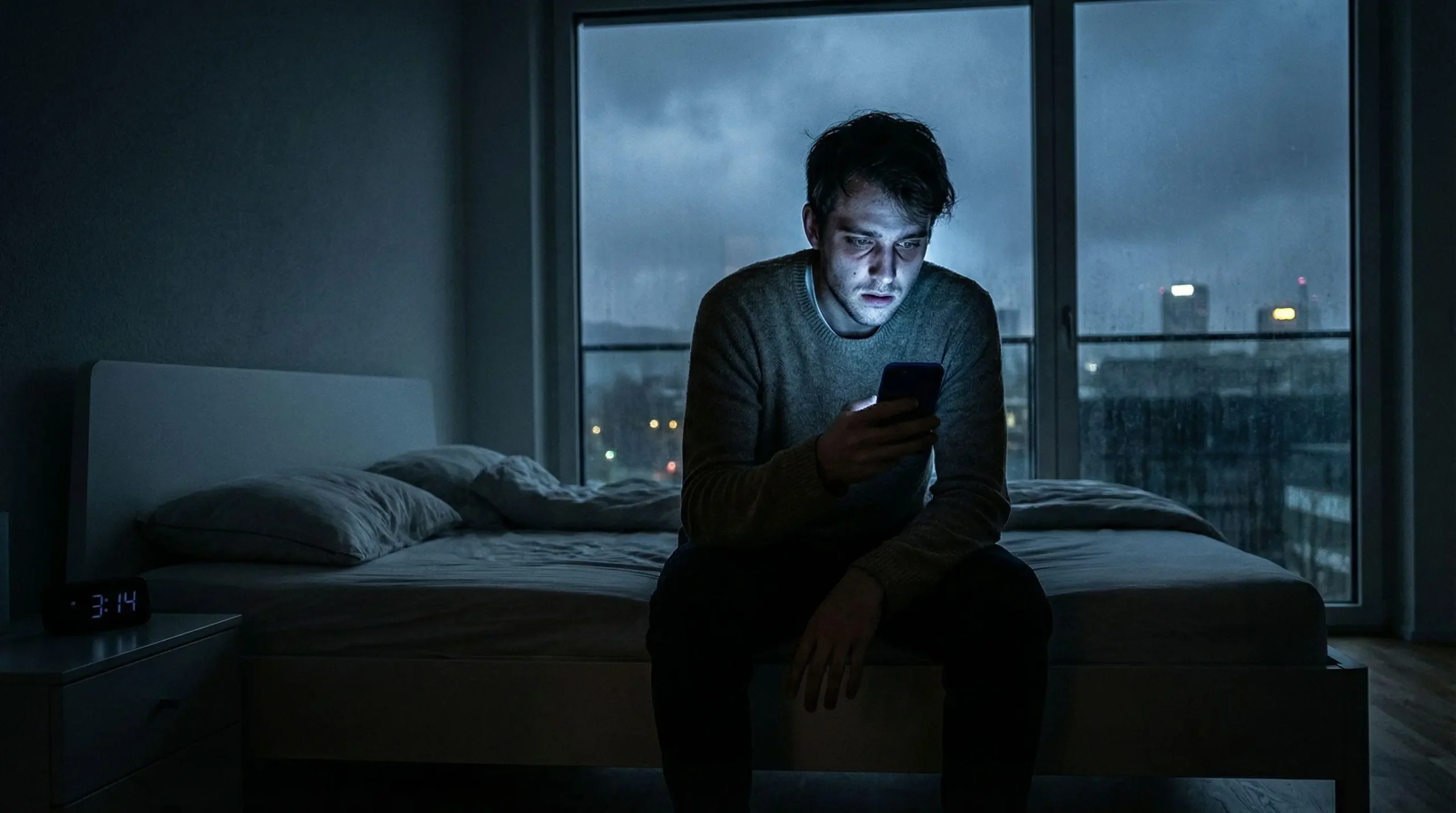
After finishing work, you pick up your phone. Although you aren’t very motivated to do anything, you don’t want to be bored. Whilst mindlessly scrolling through social media, you stumble across a suggestive post. As a result, you begin to search more and end up watching pornography.
Although you may not have had a strong sexual desire, you may have turned to pornography to gain stimulation.
Over time, you may begin to associate boredom with pornography. Therefore, if you are feeling bored, your brain may remind you that pornography is an easy option to fill the time.
This can make it more difficult for you to enjoy slower activities and times of ‘nothing exciting’.
To combat this, it can be helpful to have a few easy to do activities to do when you get bored. It may not need to be productive – a walk, listening to music, cooking or simply getting away from screen time can be enough to provide a change in activity.
4. Emotional regulation
Along with difficulty concentrating, some people with ADHD may struggle with emotional regulation. They may feel frustration, stress, restlessness and overwhelm.
If you are having a difficult day, you may be tempted to watch pornography to make you feel better.
Pornography may be used to distract from:
Stress in work or studies.
Loneliness.
Frustration and disappointment.
Anxiety around responsibilities.
Feeling overwhelmed.
Low moods and lack of motivation.
If you begin to rely on pornography to cope with feeling uncomfortable, you may begin to turn to pornography frequently.
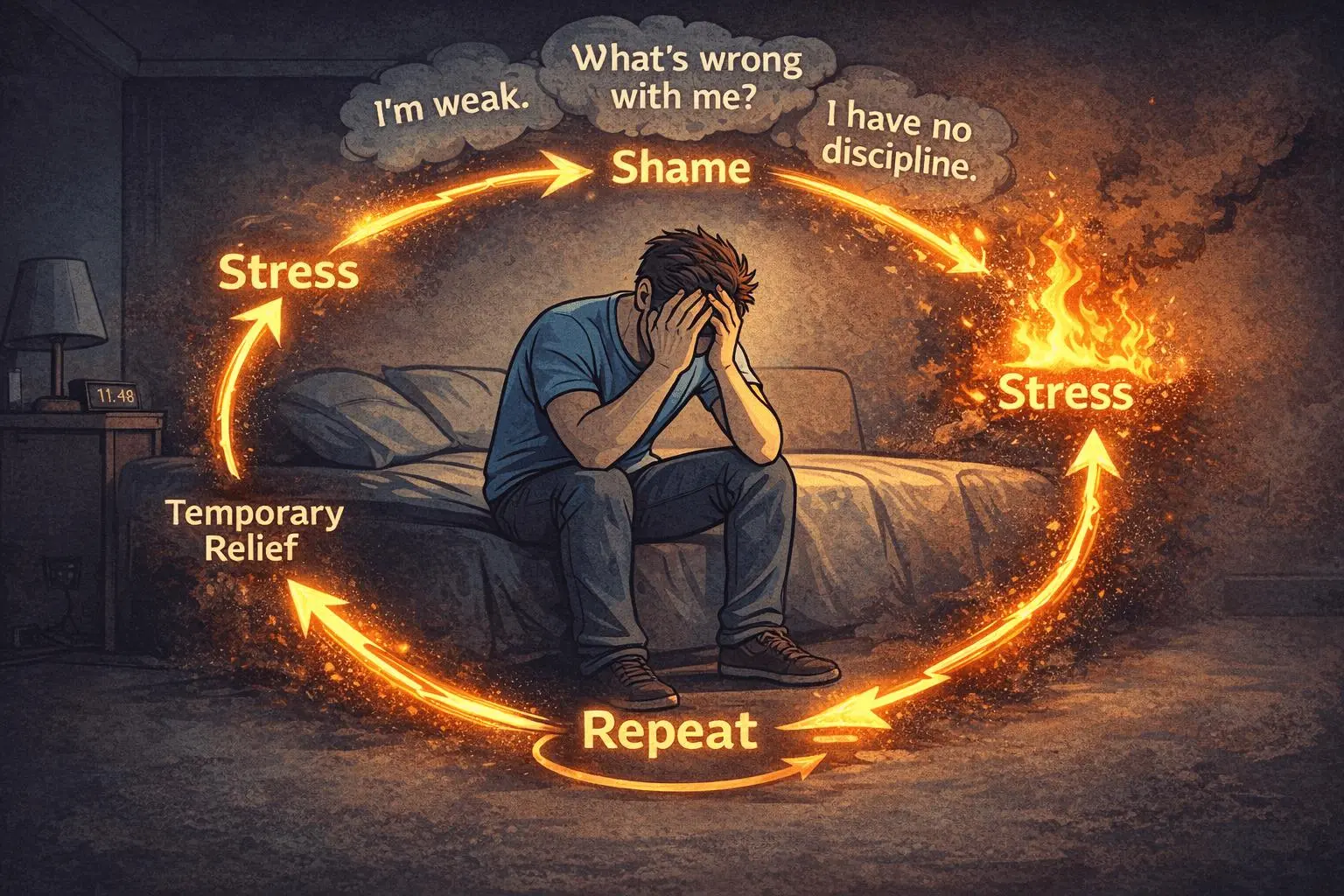
This may create a cycle. If you are feeling stressed you may watch pornography to make yourself feel better in the short term. However, once done, you may feel disappointed or guilty. Combined with the initial stress, this may make you feel even worse. As a result, you may be very tempted to escape.
Difficulties with emotional regulation in relation to ADHD may make some people more susceptible to this cycle, however people with ADHD may not all have the same experiences with emotional dysregulation.
You may find this resource useful: Adult ADHD and emotions (CHADD) . It explains how intense emotions can be for people with ADHD, and suggests techniques to help regulate emotions.
5. Hyper focus
Have you ever intended to watch a short clip of porn, but ended up watching for much longer than intended?
Maybe you began watching a video, but got sidetracked by another search. You may begin to rapidly switch between videos/ tabs/ sites to find something more interesting.
Before realising it, you may have been watching for hours.
Some people with ADHD can become highly engrossed in stimulating or interesting activities. This is often called hyper focus, although this is not a diagnostic symptom. Not everyone with ADHD will experience hyper focus.
If the activity is very engrossing, it may be hard to determine how long you have been doing it, or to change your activity.
As browsing pornography offers constant novelty and searching, it may be difficult for some people to stop.
It may not just be the amount of time spent watching pornography. You may be missing sleep, putting off tasks, neglecting responsibilties, or struggling to stop even when you no longer find it interesting.
If any of this is true for you, setting external limits may be more effective.
6. Why it can be difficult to stop
Even if you know that watching pornography is having a negative effect on your life, it may be difficult to change this behaviour.
You may have set intentions to stop, removed bookmarked links, added blocks, or attempted to stop watching pornography several times.
However, when the urge hits, it may be difficult to resist.
This can be frustrating, and you may begin to believe that you lack will power, or simply don’t care enough to change.
However, many factors can influence our decisions in this situation. These can include concentration, habits, emotional state, availability of rewards, our surroundings, sleep and stress.
If you have ADHD, it may be helpful to have a structured strategy for managing these factors.
Rather than relying on will power, try implementing changes to reduce the decision making required when the urge hits.
7. Signs that pornography use may be becoming problematic
Frequent pornography use or having ADHD does not necessarily mean that pornography use is problematic.
Whether pornography use is causing issues in your life and whether you feel in control of it is more relevant.
If some of the following apply to you, pornography may be becoming problematic:
Repeated difficulties to reduce or stop pornography use.
Spending more time on pornography than you intended.
Using pornography to cope with stress, boredom, sadness and frustration.
Neglecting work/study, sleep, hobbies, or relationships.
Continuing to watch pornography despite negative consequences.
Being very pre-occupied with pornography and planning times to watch pornography.
Feeling as if you have little control over pornography use.
Occasionally experiencing some of these points does not necessarily mean that you have a disorder.
However, if it is causing you significant distress and/or issues in your life, it may be helpful to speak to a qualified mental health professional.
Compulsive Sexual Behaviour Disorder (CSBD) is recognised in ICD-11 by the World Health Organisation, as an impulse control disorder. Having a high sex drive or feeling guilty about sexual behaviour does not mean that someone will be given this diagnosis. However, if someone has a persistent difficulty controlling repetitive sexual behaviour, which is causing significant impairment or distress, they may be diagnosed with CSBD.
Find out more from the WHO ICD-11 page.
If you want a broader step-by-step plan, see BlockerX guides on quitting porn in 15 steps , practical tips for quitting porn , and managing nighttime porn use .
8. Tips to stop watching pornography if you have ADHD
If your triggers for pornography are due to boredom, impulsivity, intense emotions, or automatic habits, relying purely on will power to stop may be difficult.
Instead, consider using strategies that work with your concentration and habits.
Know your triggers
Consider when you typically watch pornography.
Do you watch it in the morning, evening, after a stressful day, boredom, or when you are alone with your phone?
To get a good understanding of your triggers, consider recording simply:
When in the day
What you were doing
How you were feeling
What triggered you
What you did (watched pornography)
Even identifying a few patterns may help.
Example:
- Time: 11pm
- Doing: Scrolling in bed
- How I felt: Bored and fidgety
- Trigger: Suggestive content on social media
- What happened: Began to browse pornography.
Once you have an idea of the pattern, you can make changes to avoid feeling the urge as intensely.
Make it harder to access pornography
If pornography can be accessed easily every time you get the urge, it may be harder to stop.
Try the following to create barriers:
- Add a block on your devices.
- Remove bookmarks and saved links.
- Unfollow accounts frequently providing sexual content.
- Avoid having your phone in your bedroom.
- Avoid using devices in situations in which you typically relapse.
- Ask someone you trust to be accountable for you (if you feel comfortable).
The goal isn’t to make it impossible to view pornography, but to give yourself more time to reconsider.
Give yourself a short time out.
If you feel the urge to watch pornography, try giving yourself a short break.
Try telling yourself that you will wait 10 minutes.
Within this time, move out of the room, have a drink of water, go for a short walk, or do some stretching. Simply changing your environment can be helpful.
You do not need to convince yourself that you will never watch pornography again. Simply get through the 10 minutes without automatically giving in to the urge.
Sometimes the urge may subside, or may still be there. Either way, creating a gap in time can teach you that you do not have to give in to urges straight away.
Have simple routines
Having routines can be difficult with ADHD, particularly if they are complicated or require lots of motivation.
Try creating a few simple routines.
- Getting up roughly at the same time.
- Getting out of bed without scrolling.
- Completing one important task.
- Getting some exercise/movement.
- Having a calming routine before bed.
- Putting your phone away at bedtime.
Simple daily routines can help reduce idle time in which you may be more likely to watch pornography.
Try engaging activities
If you find it difficult to replace pornography with activities which feel boring or difficult to get into, try finding alternative activities which are stimulating and do not leave you feeling worse.
- Going for a walk whilst listening to music or a podcast.
- Playing a game with a set endpoint.
- Cooking something new.
- Doing some exercise.
- Calling or meeting a friend.
- Working on a hobby.
- Learning hands on.
Not all of these will be as instantly rewarding as pornography. However, they can teach you how to cope with boredom, stress and fidgetiness in a different way.
Address symptoms of ADHD
If symptoms of ADHD are making life difficult, addressing ADHD may be a useful step to take.
Treatments may include medication, therapy, ADHD coaching, or behavioural strategies. Or a combination of methods depending on individual needs.
Speak to a healthcare professional to consider what may be best for you.
The Cleveland Clinic has a medically reviewed guide on adult ADHD. It covers symptoms, diagnosis, treatment options and support.
If you already have a diagnosis of ADHD, consider speaking to your clinician about how impulsivity, emotional regulation, sleep issues and repeating behaviours are impacting the quality of your life.
If you are embarrassed to discuss pornography use with a clinician, remember that they are there to help you understand and manage this behaviour, rather than to judge you.
9. Can ADHD medications help with porn addiction?
ADHD medications can help people with core symptoms of ADHD (attention, impulsivity and executive dysfunction). However, they do not directly treat porn addiction.
If pornography use relates to impulsive behaviour, difficulties with attention or other issues related to ADHD, treating ADHD may help certain aspects. However, it may still be necessary to address habits, triggers, emotional coping strategies, and situations in which you may be more likely to watch pornography.
Everyone reacts differently to ADHD medications. It may affect sexual function. Do not make changes to your medication (start, stop or change) to manage pornography use.
Speak to a healthcare professional with knowledge of ADHD. They can consider your symptoms, treatment and overall wellbeing to make recommendations.
Helpful medical resources:
Adult ADHD – Symptoms, diagnosis and treatment (Cleveland Clinic)
10. When should I see a professional?
If pornography use is becoming difficult to control, is frequently disrupting your goals or is affecting your relationships, work, sleep, or mental wellbeing, a professional may be helpful.
Consider speaking to a professional if:
You are struggling to control urges.
Pornography is taking up significant amounts of your time.
You are using pornography to cope with almost every difficult emotion.
You are experiencing significant anxiety, depression or shame.
You have symptoms of ADHD which are impacting many areas of your life.
You are falling into a cycle of stopping, relapsing and self criticising.
A therapist with knowledge of ADHD or compulsive behaviour may be able to help you understand what is driving this behaviour and create realistic ways to manage it.
You don’t have to wait until things feel completely out of control to ask for help.
FAQs
Will people with ADHD become addicted to pornography?
No. Not everyone with ADHD will become addicted to pornography. Some studies have shown associations between symptoms of ADHD, impulsivity, hypersexuality and problematic pornography use. However, not everyone with ADHD will have problematic pornography use, and not everyone with problematic pornography use has ADHD.
Why do people with ADHD struggle to stop watching pornography?
Impulsivity, boredom, emotional regulation issues, a need for stimulation and habits centred around instant gratification may make it difficult for some people with ADHD to stop watching pornography. This can vary between individuals.
Is pornography a dopamine addiction for people with ADHD?
It is too simplistic to consider pornography as a dopamine addiction for people with ADHD. Many factors may be at play in this behaviour, including rewards, motivation, learning, novelty, habit and emotional regulation. ADHD is a complex condition and cannot be simplified to a lack of dopamine.
Can hyper focus make pornography use worse?
It may contribute for some people. If porn is highly stimulating and easy to keep switching between, hyperfocus or becoming absorbed in the activity may make it harder to notice time passing or stop when intended. Hyperfocus is not experienced by everyone with ADHD, and it is not itself a diagnostic symptom.