AI Pornography & Deepfake Pornography
AI Pornography & Deepfake Pornography
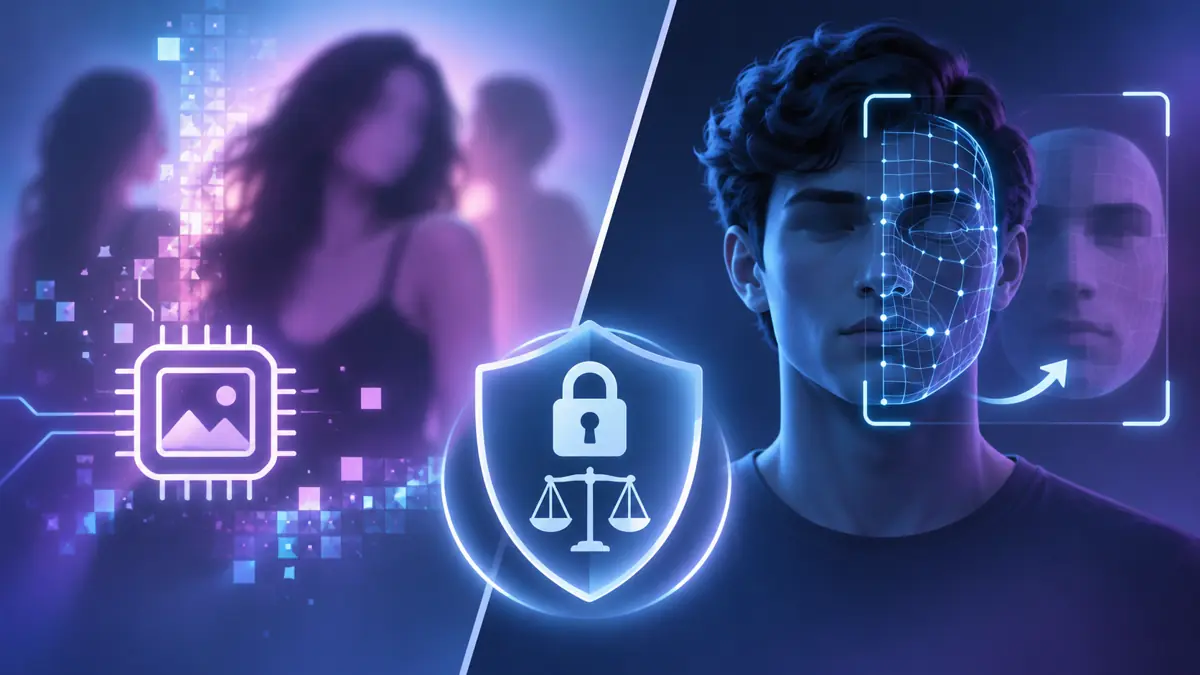
AI deepfake porn can involve a real person’s likeness, while AI-generated pornography may also depict entirely fictional adults. Understanding the distinction is important when considering consent and harm.
Overview
Due to advancements in artificial intelligence technology, images and videos can be created in a variety of ways. Entirely fictional images can be created based off your prompts. Or, images and photos can be manipulated with existing imagery to create situations involving people which have not occurred. Although often referred to collectively as AI pornography, not all AI pornography is the same.
It is important to understand the difference between AI pornography and sexual deepfakes. Different technologies, people, consent considerations, and potential harms may be involved. An entirely fictional adult created using AI tools, and a sexual image where a real persons’ face/character is used without their consent to create fabricated intimate content with them, are very different.
This article will explain what AI deepfake pornography is, consent considerations, risks of non-consensual deepfake imagery, and steps you can take to protect yourself and/or those affected.
What is AI pornography?
AI pornography refers to explicit content that has been created (in part or in full) using Artificial Intelligence tools. This can involve entering prompts, providing references, or using generative tools to create images/ videos. The people depicted in this content may be entirely fictional.
Existing content can be manipulated with AI tools. This can involve changes to clothing, body, face, positioning, scene, and other features. As AI can create highly realistic content, it may be difficult to determine whether the image is real, altered, or synthetic.
The term ‘AI pornography’ only refers to how the content was created. It does not indicate whether it is ethical, consensual, legal, exploitative, or whether it is based on a real persons’ likeness.
What is deepfake pornography?
AI deepfake porn is a term often used for sexual imagery that imitates or represents an identifiable real person without their consent.
Deepfake pornography is sexual explicit content, which may involve manipulation of images/ video to make it appear that a real persons’ face/ identity/ voice has been used to create sexual content or intimate situations. This can involve swapping faces, image generation based on identity, and manipulating video content.
Whilst AI generated images can be entirely fictional, sexual deepfakes may include identifiable people. Images created in a non-sexual context may be used as references to create intimate content. Despite this, the person(s) depicted in the image may not have participated in the creation of the image, may not have consented to it, and may not have known it was created.
The term non-consensual intimate imagery or image based sexual abuse, or sexual digital forgeries, are increasingly being used in research and legal discussions in order to better reflect the negative impact of this type of content on individuals. This puts emphasis on the lack of consent and violation in relation to this type of content, rather than referring to this as pornography.
AI pornography and deepfake pornography: Key differences
The distinction between AI pornography and AI deepfake porn is mainly about whether a real person’s identity or likeness is represented.
Although there is some overlap (deepfake pornography may be created by generative AI, and AI content may include a real persons’ likeness), it is important to understand the differences between them in order to understand consent and potential harm.
- Identity: AI sexual content may involve entirely fictional adults. Sexual deepfake content is likely to include a recognisable real person.
- Content used: Some AI content may be entirely fictional. Deepfake pornography usually involves images, video, voices, or other identity elements from a person.
- Consent: There may be ethical considerations regarding content which involves fictional characters. With deepfake pornography, there are additional concerns regarding whether the person whose likeness has been used has consented to be depicted in sexual content, and for it to be created and shared.
- Potential impact on individual: Whilst fictional content may not directly impact an individual, realistic deepfake content can have serious impacts in respect to an individual’s privacy, reputation, relationships, feelings of safety, employment, and wellbeing.
- Realism: AI content may look unrealistic or obviously synthetic. However, deepfake content may be realistic enough to be mistaken for real footage.
Note: Not all fictional content is safe or legal, and AI content which includes real people’s identities can be considered deepfake content. It is important to consider the context and applicable laws in each case.
AI deepfake pornography & consent
Having consent to a photograph in one context, does not necessarily mean consent to create sexual content from it. For example, someone may have willingly sent a portrait to friends, uploaded a photo on social media, or sent an image to someone in private. However, giving consent to them appearing in a photo, does not necessarily mean consent to sexual content being created from it.
In sexual deepfake pornography, consent may not have been given to:
- Using their face/body/identity in sexual or intimate content.
- Creation/editing of an image/video.
- Uploading/sharing/selling/distributing content.
- Download, sharing or circulation by others.
Consent must be freely given, specific and informed. If someone has publicly uploaded an image it does not mean they gave consent for sexual content to be created from it. If someone is a public figure this does not mean they consented to sexual content to be created from images of them. Similarly, if a deepfake image is labelled as AI content, it does not mean consent is given. Even if there was no actual sexual act involved, there may still be concerns regarding the privacy and dignity of someone being included in intimate content without consent.
Offences relating to non-consensual intimate imagery, including AI assisted manipulation to create sexual imagery to appear as if the person is involved in sexual explicit activity, are covered by Directive (EU) 2024/1385 on combating violence against women and domestic violence in the European Union. This is subject to the applicable scope of this directive, and implementation by nations. Legalities vary across countries. See below for some examples of laws.
When is deepfake pornography image based sexual abuse?
If sexual imagery of an identifiable person is created, shared, threatened to be shared, or used without consent, it may constitute image based sexual abuse. It does not matter if the content is not real sexual imagery, as a person can still be negatively impacted.
Deepfake pornography may be used to cause shame/embarrassment, intimidation, damage to reputation, pressure into a relationship, financial extortion, or punishment for turning someone down. It may be sent privately, or shared with friends/colleagues. It can be posted on websites, or even just used as a threat without widespread publication.
Image based abuse can include real, manipulated or fabricated intimate imagery (including deepfakes). Guidance can be found from The Australian eSafety Commissioner. This guidance is useful globally, however the support services available will depend on where you are located. See below for examples of research. The Australian eSafety Commissioner’s guidance on reporting and receiving support can be found here.
Research published in the Journal of Interpersonal Violence in 2025 explores sexualised deepfake abuse from perpetrators and victims. A systematic literature review published in 2025 explores social, legal & ethical considerations of AI generated deepfake pornography (including privacy, consent and trust). This helps to understand that deepfakes can be a form of online abuse, and cause social harms. You can read the systematic literature review on social, legal & ethical considerations of AI generated deepfake pornography (open access) here. Research exploring sexualised deepfake abuse from perpetrators and victims can be found here.
Impacts on people targeted
People targeted by sexual deepfake pornography may be shocked, anxious, angry, embarrassed, fearful, helpless, or feel like they have lost control. Even if they know it is fabricated, they may be worried that people they know (friends, family, partners, colleagues, and employers) have seen the content, or may in the future. This uncertainty may be very distressing.
Impacts can include:
- Concerns over reputation: Concern that others may believe the content is real, or may judge you.
- Loss of privacy: Feeling as if you have lost control over a part of your identity/representation.
- Strained relationships: Concerns of causing confusion, conflict, mistrust, or pressure to explain fabricated content.
- Mental health issues: Abuse may cause stress, disrupted sleep, anxiety or concentration issues.
- Withdrawal: Some people may stop using social media, working in employment, attending school, or socialising due to fears of being exposed/harassed.
Everyone will react differently to this. There is no expected emotional response to make it clear that the experience has been harmful. If this has happened to you, you do not need to prove that you are suffering enough to require support.
Is all AI pornography a deepfake?
No. Although there are links between AI pornography and deepfake pornography, they are not the same. Generatively created content may not involve real people, and are entirely fictional adults. However, sexual deepfake pornography will involve imitation or representation of a real persons’ identity/representation in order to create fabricated sexual/intimate content.
There may be grey areas. For example, content that appears similar to a person but is not specifically named. Or, synthetic content may be incorrectly labelled as involving a specific person. It is important to consider the context, intention, recognisability of the person in the content, and the use of the content. If unsure, avoid sharing or reposting sexual content that appears to be targeting someone without consent.
How to protect yourself from AI deepfake pornography
Awareness of AI deepfake porn and image-based abuse can help people recognise risks and respond safely.
Whilst we cannot fully prevent people from misusing digital content in this way, it is not your fault if you are targeted. However, there are a few steps you can take to reduce the risk of being exposed, and assist with dealing with it.
Limit public representation of yourself
Consider limiting the number of personal images you have on public social media accounts. By adjusting your privacy settings, and limiting who can download, view, or reuse your content, you may reduce your risk of being exposed. However, there is no guarantee you won’t be.
Be cautious with AI image/face upload tools
Before uploading images to AI tools consider how the AI will be using your data. Consider how long it will store it, train on it, delete, share and protect your privacy. Avoid uploading sensitive images unless you are aware of how the image will be handled.
Avoid sharing suspected deepfake content
By sharing content with others to ‘warn them’, you may be increasing the reach of abusive content. Instead, use the websites reporting feature, or get support from a trusted support service.
Report the content & Gather Evidence
If intimate deepfake content of you has been shared or threatened, make note of the relevant details (account name, web address, time, messages). Safely save evidence of this without repeatedly downloading or distributing sexual content. Consider contacting a local support service to get advice on how to get content removed and legal options.
Get support
Contact a trusted person, counsellor, victim support service or relevant helpline. You do not have to deal with threats, harassment and the impact of this abuse on your own.
The Australian eSafety Commissioner provide guidance on reporting image based abuse. You can find FAQs on image based abuse here. This includes information on real, manipulated and fake content, consent and reporting. The UK Revenge Porn Helpline’s advice on deepfakes provides information on synthetic sexual content, and available support in the UK.
What to do if someone creates or shares a deepfake of you
If you find a sexual deepfake, try to take the following steps at your own pace:
- Don’t engage with threats. If you are being extorted, don’t negotiate, pay any money, or send more images. Get support from a trusted service or law enforcement.
- Save any evidence. This can include saving web addresses, usernames, times, messages, and any relevant contextual screenshots.
- Report the content. Report it under the intimate imagery / non-consensual content category on the website/platform. Ask for it to be removed, and if possible, ask if re-uploaded content can be prevented.
- Get local support. If you are feeling threatened or the content is being shared, contact a victim support service, legal service or police service in your area.
- Take care of your mental health. If you are repeatedly searching for this content, consider taking a break. You may also want to get support from a trusted person to monitor progress of reports/removal.
Be cautious of websites offering to take down content for a fee. They may not be legitimate and could cause further harm to you. If a minor is involved in this situation, immediately contact an appropriate child protection service or law enforcement. Don’t share, download, or circulate the content.
Laws on Deepfake Pornography
There is not one universal law on all types of AI pornography. The types of laws depend on many factors. This could include whether the content involves recognisable people, if it was created/shared without their consent, and if it is used to harass/ extort. It may also depend on the age of the person in the content.
In the European Union, Directive (EU) 2024/1385 requires member states to cover certain forms of non-consensual sharing, and AI assistance in creating sexual imagery in national laws. In the UK there are separate laws and developments on intimate image abuse and deepfakes. The UK Revenge Porn Helpline explain synthetic sexual content and support options. In the United States, federal & state laws may apply, relating to non-consensual intimate imagery and AI sexual imagery. Australia has criminal laws, and civil/regulated options for certain forms of image based abuse.
This information is not legal advice. Laws and processes can change. If you are affected by this, refer to official government resources, or a qualified legal professional in your country to understand what options are available to you.
How to tell if sexual content is AI generated
Sometimes synthetic content may have noticeable errors in it. This could be incorrect rendering of jewellery, strange reflections, incorrect lighting, incorrect text, and unnatural features in hands/faces. However, AI tools continue to improve, and errors can occur in real content too. Therefore, visual clues may not be reliable. Reverse image search, checking sources, metadata, or specialist forensics may give further insight. However, there is no guarantee. If unsure if content is AI generated, don’t accuse someone of creating it, or repost it.
AI technology does not equal consent
Creating AI deepfake porn using someone’s likeness does not mean that person has agreed to the sexual depiction.
AI technology can be used in many positive ways, including art, accessibility, education, entertainment, etc. Whether content is ethically acceptable depends on many factors. This includes who/what is being represented in the image, whether real people can be recognised within it, what consent was given, and how it is created and used.
Even if content is synthetic, if a real persons likeness has been used to create sexual content without their consent, it is still important to consider ethical concerns. Even if there was no real sexual image or video to begin with, it is important to consider the privacy, dignity, and appropriate use of people in the images. The use of a persons likeness in AI deepfake pornography does not constitute consent.
Frequently asked questions about AI deepfake porn
Is AI pornography the same as deepfake pornography?
No. AI pornography may include entirely fictional characters. Deepfake pornography uses AI or other manipulation to create sexual content involving a real persons identity/representation. Some AI pornography can be considered deepfake pornography.
Can deepfake pornography be created without consent?
Yes. Publicly available images, or images obtained in private can be used to create sexual depictions of people without their knowledge or consent. This may be illegal, or against the rules of the platform depending on the country and circumstances.
If I post a public image of someone, does that give people consent to create a deepfake?
No. Even if the image of someone was posted publicly, this does not mean that people have consent to create sexual imagery using that image.
What should I do if there is a deepfake of me online?
Save any relevant information (web addresses, account names, messages, and dates). Report the content. Get support from image based abuse support. If you are being threatened or targeted, consider getting local legal support. It is in no way your fault that someone has acted abusively.
Can I report AI deepfake pornography?
Many platforms allow reporting of non-consensual intimate imagery or manipulated sexual imagery. Support services and legal options vary between countries. In Australia, and in the UK, support can be provided by the eSafety Commissioner and UK Revenge Porn Helpline.
Further reading
Final thoughts
AI pornography and deepfake pornography are often used interchangeably. However, it is important to understand the difference between them. Using fictional synthetic content, and using a real persons representation to create sexual content, can raise very different ethical, privacy and legal concerns.
Consent is very important in relation to using peoples likenesses in intimate imagery without their consent. Although technology may make creating images quick and realistic, people still have a right to privacy, dignity, and control over how their identity is used. If you or someone you know is experiencing sexual deepfake abuse, there is support available. You do not have to go through this alone.