Why am I unable to stop scrolling Reels and Shorts?
Have you ever opened Instagram intending to watch just one Reel, then spent 40 minutes scrolling? Or opened YouTube Shorts for a quick video and kept going long after you planned to stop?
You tell yourself, “Just one more video.” One is amusing, another is informative, then a relatable story appears, followed by something enjoyable. Before you know it, an hour has passed.
Many people recognise this pattern. Reels, TikTok, and YouTube Shorts make it easy to move from one short video to the next. The challenge is often not a single video, but the repeated cycle of expectation, engagement, and reward.
Understanding why it can feel difficult to stop scrolling Reels and Shorts is a useful first step toward regaining control of your attention.

What Does Problematic Short-Form Video Use Mean?
People sometimes use “short-form video addiction” to describe viewing that feels difficult to control and starts to interfere with daily life. The phrase is informal; high use alone does not establish a clinical disorder.
Unlike a film or a book, an algorithmic feed may not offer a natural stopping point. Each swipe brings another video, and its content is uncertain. That uncertainty can make it tempting to continue.
This lack of knowledge can drive further engagement.
People can spend extended periods scrolling through short-form feeds such as:
- Instagram Reels
- YouTube Shorts
- TikTok
- Facebook Reels
- Snapchat Spotlight
- other short-form video algorithmic content
High use alone does not necessarily indicate a disorder. More concerning patterns can include repeatedly using longer than intended, difficulty stopping, neglecting responsibilities, or continuing despite clear negative effects.
Research into short-form video use, attention, self-control, and mental health is developing. Reviews report associations between problematic use and some adverse outcomes, but much of the evidence is observational, so it cannot establish that short videos directly cause them.
Why Am I Unable to Stop Scrolling Reels and Shorts?
Short-form video services are designed to make viewing easy to continue. Several psychological and design factors may contribute to the challenge of stopping.
- There is no defined end point to the content
As previously mentioned, conventional entertainment such as TV programmes, films and books will generally have an end.
Whilst scrolling for short-form video content, however, there is no defined point at which the user must cease viewing. Instead, the next video can continually be loaded.
As there is no distinct end to the viewing process, a person must consciously choose to cease. Should they be tired, uninterested or otherwise disengaged, this may be further delayed.
- Each scroll generates expectation
It is unknown what the next video will be.
It could be highly interesting, amusing, surprising or emotionally engaging. Such unknowns can entice someone to continue to scroll.
This can resemble a variable reward system. As the reward is not known, there is often an increased drive to engage in order to potentially obtain a more rewarding outcome.
Whilst many short-form videos are uninteresting, on occasion there will be videos which are perfectly engaging.
This can lead to thoughts such as;
Perhaps the next video will be interesting?
And so, further scrolling occurs.
- Short-form videos are highly stimulating
Often, short-form videos incorporate music, motion, text and humour, along with editing and a narrative. Furthermore, they frequently provoke an emotional reaction.
Attention is swiftly directed from one topic to the next.
Some videos may relate to fitness, others to relationships, and further ones to gaming, food, travel, comedy, news and/or inspiration.
After rapid, varied content, slower activities can feel less immediately engaging for some people. That experience does not prove that a person’s attention span has been permanently damaged.
Finding slower tasks difficult does not mean your attention span is permanently compromised. Changing routines and allowing time to readjust may help.
- Algorithms continue to tailor content to one’s preferences
Contrary to the notion that content is randomly displayed, online services utilise data such as viewing, interaction and behaviour in order to analyse and anticipate what an individual may wish to watch.
Should a person repeatedly view certain types of video content, further related material may then be suggested.
Such highly personal content can be hard to disengage from as it consistently relates to one’s interests.
Personalised recommendations can make a feed feel relevant, which may encourage continued viewing. The precise recommendation systems differ by platform and change over time.
- Scrolling can become an automatic behaviour to combat boredom
Over time, the act of opening a short-form video application can become habitual.
People often access their phones in situations such as when waiting for food, on the toilet, during travel and when relaxing or in bed.
Sometimes, even without consciously intending to, a person will open a short-form video application and commence scrolling.
Such behaviour can become linked to instances of boredom, discomfort and/or inactivity.
Eventually, periods of time spent in silence or with limited stimulation can even become uncomfortable in themselves, despite there being no actual issue.
The Short-Form Video Scrolling Cycle
For some people, repeated scrolling can follow a cycle like this. It is a simplified way to describe a habit, not a diagnosis or a cycle that applies to everyone.
| Boredom, stress, loneliness, habit and/or procrastination |
| OPEN APP |
| ENGAGE WITH SHORT VIDEO CONTENT |
| NOVELTY, ENTERTAINMENT AND/OR REWARD |
| “JUST ONE MORE VIDEO” |
| INCONSCIOUS PASSAGE OF TIME |
| GUILT, tiredness and/or wasted time |
| NEXT TRIGGER OR DISCOMFORT |
Following a trigger, a person is often motivated to engage in stimulating behaviour. Opening of a short-form video application can instantly alter a person’s emotion and/or attention. Continued viewing is facilitated by the perpetual availability of new material.
At some point, a person may then feel bored, exasperated and/or guilty about their viewing behaviour. However, should they then again feel bored or stressed in future, their brain may recall the swift sense of gratification gained from scrolling and so again initiate this behaviour.
In this way, even a seemingly innocuous behaviour can become habitual and hard to control.
7 Indicators That Scrolling May Be Becoming a Problem
You tend to continue to scroll for far longer than planned
Whilst intending to only engage with short-form videos for 5 minutes, people often in fact view content for 30 minutes, an hour or more.
You struggle to disengage despite boredom
Although most videos no longer provide enjoyment, a person may continue scrolling due to habit.
You utilise short-form videos to avoid your feelings
In situations of stress, loneliness, anxiety and/or discomfort, people often automatically open short-form video applications to avoid reflecting upon their feelings.
Your productivity is diminishing
As previously mentioned, continual scrolling can hinder productivity. People often have difficulty focusing on work, study and/or other commitments.
You watch short-form videos late at night
Despite being fatigued, people can continue to scroll in bed and so postpone their bedtime in order to view a few extra videos.
Slower-paced activities become harder to undertake
People may find it challenging to finish books, watch complete films and/or carry out and maintain focus upon tasks as their brains have become accustomed to high levels of novelty.
This does not show that your attention span has been irreversibly affected. It may be more helpful to adjust habits gradually and notice whether concentration improves.
You become frustrated by your inability to scroll
People often feel antsy, annoyed and/or unusually bored when they are unable to scroll or when they attempt to disengage from viewing.
Should these behaviours continually impact upon your life, it may be that the issue is more significant than just leisure-based. At this point, reflection upon one’s short-form video engagement may be beneficial.
Impacts of Short-Form Video Scrolling on the Brain and Mental Health
How short-form video use affects someone may depend on the person, their reasons for watching, the pattern of use, and what the behaviour displaces in their life.
Some studies link problematic short-form video use with attention and self-control difficulties, as well as stress or anxiety. The evidence is still developing and does not prove that scrolling directly causes these outcomes.
Attention
As previously outlined, frequent engagement with short-form videos can promote a tendency for rapid shifting of attention. People may then desire further stimulation and/or check their phones more often when attempting to work or study.
A 2025 systematic review and meta-analysis found associations between short-form video use and poorer cognitive outcomes, including attention and inhibitory control. The authors also noted that more research is needed; these findings do not by themselves show that video use causes lasting attention problems.
Procrastination and productivity
Although scrolling may feel like a break from work, it can also become a way of putting off a task.
People may put off important work as engaging with short-form video content is often perceived as an easier and more instant source of reward. Subsequently, people may then feel guilty for having wasted time and so find it even harder to commence work.
Sleep
Scrolling late at night can both delay bedtime and also maintain an individual’s cognitive arousal at a time when they should be beginning to wind down.
Indeed, even if someone is physically tired, they may still be tempted to continue scrolling due to the allure of the next video. Irregular sleeping patterns can in turn impact upon a person’s mood, energy, attention and motivation.
Stress and general mental well-being
Some people utilise short-form video content as a method of avoiding unpleasant feelings. Although this can offer temporary respite, habitual use of scrolling in this way can stop a person from effectively addressing the root cause of their stress.
A 2026 systematic review and meta-analysis found that problematic short-form video use was associated with several mental-health measures, including anxiety, depression, and stress. The studies varied in design and measurement, so the results do not prove cause and effect. See the review indexed by PubMed for details.
Why do I continue to scroll even though I am no longer finding it enjoyable?
One of the most infuriating features of short-form video addiction is that people continue to scroll, despite the videos no longer being enjoyable.
Whilst scrolling, a person may fail to laugh, gain any meaningful information or feel fulfilled by what they are viewing. Despite this, they may continue to engage in this behaviour.
Whilst enjoyment is often an influential factor in behaviour, behaviour can also become habitual. People may subconsciously associate an application with stimulation and/or solace. Once such behaviour has been initiated, it often becomes easier to continue than to disengage and pursue alternative actions.
Furthermore, people may adopt a mindset that the subsequent video will be more enjoyable than the current one. Thus, they will endeavour to locate this in preference to appreciating the present video.
Consequently, a person can simultaneously engage in greater levels of behaviour, yet feel less fulfilled.
It is, therefore, essential to recognise the distinction between behaviour based upon enjoyment and behaviour which is habitual. Often, rather than requiring further self-discipline, it is the behaviour itself which should be disrupted.
9 Effective Ways to Stop Scrolling
Move short-form video applications off your home screen
Transfer social media and short-form video apps from your phone’s home screen and place them into a folder or ideally remove them completely.
This aims to reduce habitual behaviour. Introduction of even slight disruption can enable individuals to pause and reflect on their actions.
Disable notifications
Avoid being prompted back onto social media via phone notifications.
Generally speaking, there is little necessity for alerts to advise you that further videos are available for viewing. In addition to providing further triggers, notifications can also impede concentration.
Establish realistic restrictions for apps
iPhone and Android devices both offer built-in tools for setting app boundaries. On iPhone, Screen Time includes App Limits; Android Digital Wellbeing offers app timers. Menu labels can vary by device and software version.
Apple’s Screen Time instructions and Google’s Digital Wellbeing guide explain the current options.
Initially, try to implement reasonable restrictions as these are more likely to be adhered to. Should you currently scroll for 4 hours per day, for example, imposing a 10 minute daily restriction may feel unattainable and thus be frequently breached.
Gradually decrease your viewing behaviour and concurrently develop alternative pursuits.
Avoid scrolling for short-form videos in bed
Establish a low stimulation environment within your bedroom.
Charge your phone separately from your bed. Additionally, if needed, use a separate alarm clock and refrain from accessing short-form video applications whilst attempting to sleep.
In particular, it is easy to become habitually engaged in scrolling during late evening hours as people are often additionally sleepy and so are less likely to follow through upon their original intentions.
Recognise your behavioural triggers
Become aware of when you habitually open short-form video applications.
Is it in response to boredom? Stress? To avoid work? Loneliness? Or in anticipation of something?
By recognising what prompts your behaviour, you can then effectively substitute this behaviour.
Substitute habitual behaviour with preferred activities
When you interrupt a habit, it can help to have another activity ready. Choose something that feels worthwhile to you, rather than treating every replacement as a productivity task.
Consider for example, walking, exercising, reading, listening to music, cooking, writing and/or studying. Alternatively, you may wish to speak with somebody.
Whilst it is not essential for all of these activities to be highly productive, it is important that they constitute a more healthy alternative pastime.
Engage in activities which do not constantly involve stimulation
Challenge yourself to undertake activities without instantly resorting to your phone.
For example, eat, walk and/or sit in a space without simultaneously scrolling. Developing the ability to comfortably exist in less stimulating environments can aid in reducing habitual behaviour.
Undertake a short-form video detox
Attempt to abstain from using Reels, Shorts and/or TikTok for 24 hours, over the weekend or for a more extended, yet still manageable, period of time.
Throughout this period, observe your behaviour, mood, attention and the activities which you instinctively wish to participate in.
Although a detox does not miraculously reset one’s brain function, it can be highly beneficial as it enables people to disrupt habitual behaviour and to assess the extent to which their scrolling is undertaken purposefully.
Implement a block
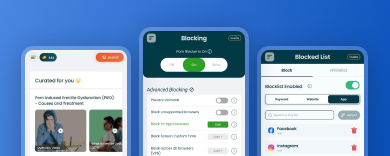
Should you frequently breach your app restrictions, consider using a programme or website that can block access to short-form video applications during times when you are most susceptible to scrolling. For example, you can review the current features of the BlockerX social media blocker and decide whether it fits your needs.
This can include periods of work, study and/or bedtime, amongst other times at which scrolling is commonly predominant. Wherever possible, request support from someone that you trust in upholding your restrictions.
Rather than making your phone unusable, it is important to introduce sufficient obstruction so that actions can be guided by intention as opposed to impulse.
Developing a Healthier Relationship With Short-Form Video Content
Not all social media platforms need to be abandoned. The aim is to regain choice over the timing, reason for, and manner of your engagement. For related guidance, see the BlockerX article on practical ways to stop doomscrolling.
Attempt to make your engagement with short-form video content purposeful.
Prior to opening an application, consider what you would like to do. Are you seeking specific video material? Checking on something? Or merely seeking to relax from boredom?
Should you have no particular purpose in mind, consider undertaking alternative actions.
You can also reshape your feed by unfollowing or muting accounts that keep you watching, removing nonessential notifications, and choosing a specific purpose before opening an app.
Most crucially, it is important to realise that not all unoccupied time should be utilised for scrolling. Your attention is a precious resource and it is your right to direct it towards pursuits which genuinely enhance your life.
Commonly Asked Questions
Why can Reels feel so hard to stop watching?
Personalised recommendations, rapid novelty, and feeds without a natural stopping point can make Reels compelling. Scrolling can also become a habit tied to emotion or context, such as boredom or stress.
Can YouTube Shorts affect my attention?
Some research links problematic short-form video use with attention and self-control measures, but it has not established that YouTube Shorts cause persistent attention problems.
Why do I continue to scroll despite being bored?
Scrolling can become habitual and may be prompted by boredom, stress and/or inactivity. Even if one is not currently enjoying their viewing behaviour, they may continue to scroll in pursuit of stimulation or in anticipation of watching something more interesting.
How can I prevent myself from scrolling through Reels for extended periods?
Various strategies can assist in this, including; restricting notifications, implementing app limitations, ensuring that your phone is not accessible during high risk times, identifying behavioural triggers and using a block where appropriate. Moreover, substituting scrolling behaviour with enjoyable non-screen activities can further facilitate behaviour change.
Is “short-form video addiction” a recognised diagnosis?
Investigation into short-form video maladaptive engagement is ongoing. People can display compulsive behaviour, a lack of control and suffer adverse outcomes. However, it is not universally recognised that short-form video addiction constitutes a distinct formal clinical diagnosis.
Regain Control of Your Attention
Typically, initial engagement with Reels, Shorts and TikTok does not constitute a severe issue and is often for leisure, relaxation or to alleviate boredom.
Nonetheless, when brief periods of viewing evolve into lengthy viewing sessions, when a person struggles to disengage despite wishing to, and when scrolling begins to supplant sleep, work, relationships and/or fulfilling pursuits, further examination is warranted.
As previously explained, the short-form video addiction cycle is largely underpinned by habitual behaviour. Awareness, together with the establishment of purposeful controls, and the development of a lifestyle comprising more fulfilling experiences than those provided by an infinite feed, are integral to disrupting this cycle.
It is not essential for every unoccupied period to involve scrolling. Nor is it imperative for an individual to engage with every trend. Likewise, further swiping is not essential for a fulfilling day. Take control of your attention one scroll at a time.