Nobody Warned You NoFap Would Feel Like This

Reviewed
by – Dr.
Nick Nissen, MD
Dr. Nick Nissen is a clinical fellow at the Department of Psychiatry, Harvard Medical School.
His interests are treatment-resistant disorders and care management. He lectures on topics such
as mood disorders, sleep disorders, mindfulness, and addictions. He is also the host of the
Brain Health with Dr. Nissen Podcast and collectively has 90K+ followers across social media
platforms.
When you first hear about Nofap, you might think that giving up porn and masturbation would be a simple and straightforward solution to improve your life. However, what many people don’t talk about is the dark side of Nofap and the depression that can come with it.
NoFap Depression: Why It Happens & How to Get Through It
Feeling worse, not better, after quitting porn? NoFap depression is real and more common than anyone admits. Here’s what’s actually happening in your brain and how to get through it.
You did the hard part. You deleted the tabs, put up the blockers, told yourself this was the reset you needed. And now, a week or two in, you feel… worse? Flatter, foggier, weirdly numb, maybe even more anxious than before you started. If quitting was supposed to be the healthy choice, why does it feel like something’s wrong with you?
Here’s the part almost nobody says out loud before you start: this dip is common, it has a name, and it’s not a sign you broke something. It’s called NoFap depression, and understanding what’s actually happening in your brain right now is the fastest way to get through it instead of white-knuckling it blind.
Quick note before we go further
This article explains a documented pattern people commonly report during porn/masturbation abstinence — it’s not a clinical diagnosis, and it’s not a substitute for talking to an actual professional if what you’re feeling is heavy, persistent, or scary. If you’re not sure which category you’re in, that uncertainty alone is a good enough reason to reach out to someone qualified. More on that below.

What NoFap actually is (and isn’t)
NoFap started as an internet challenge and turned into something closer to a full self-discipline movement — abstaining from porn and, for a lot of people, masturbation entirely, as a way to reset compulsive habits and rebuild self-control. It’s not just about not doing something. The actual goal underneath it is rewiring how your brain responds to stress, boredom, and dopamine in general.
Which is exactly why the process can genuinely hurt before it helps.
So what is “NoFap depression,” specifically?

It’s the cluster of low mood, flatness, irritability, and motivation loss that shows up for a lot of people in the early weeks of quitting — most commonly described as feeling emotionally muted rather than acutely sad. Think less “crying on the floor,” more “nothing feels like it used to, and I can’t quite explain why.”
It’s frequently described using withdrawal language, and that’s not just internet dramatics — it maps onto something real happening in your brain chemistry, not a personal failure to “just be happier about your choices.”
Why does quitting something unhealthy make you feel worse first?
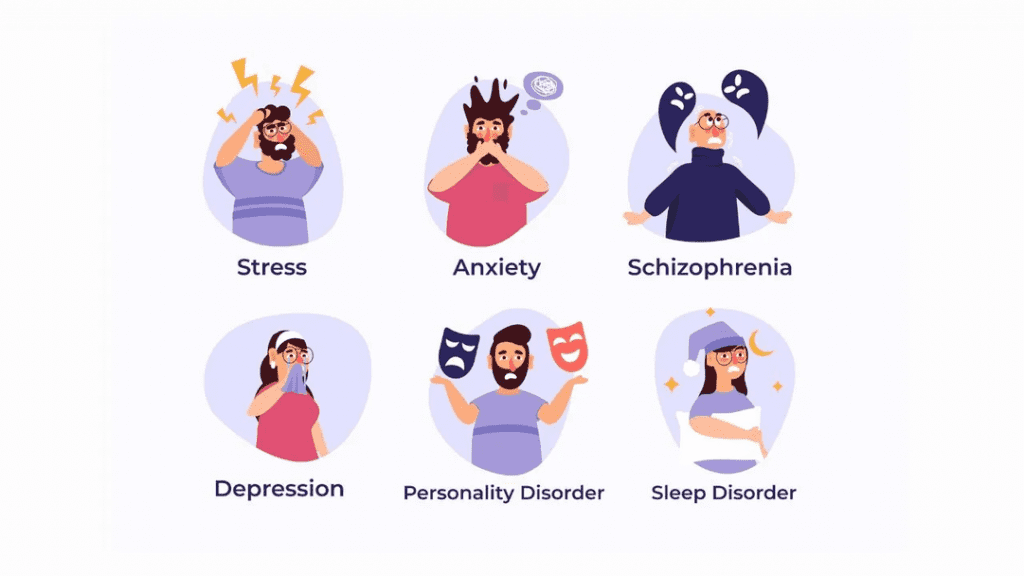
This is the part that actually explains everything, so stick with it.
Your brain built a whole system around that dopamine hit. Repeated porn use trains your reward circuitry to expect a specific, intense stimulus on demand. Pull that away suddenly, and your brain doesn’t just shrug it off — it goes through a genuine recalibration period where your baseline for “normal” pleasure feels underwhelming by comparison. Ordinary things — a good meal, a funny video, hanging out with friends — can feel oddly muted for a while. That’s not you being broken. That’s a dopamine system readjusting its expectations, and it takes time.
You’ve lost your go-to coping mechanism, cold turkey. For a lot of people, porn wasn’t just a habit — it was the fastest available tool for managing stress, boredom, or loneliness. Removing that tool without immediately replacing it with something else leaves a genuine gap, and that gap gets felt as low mood until something fills it.
Quitting drags up what you were avoiding. This is the one nobody prepares you for. If porn was functioning as an escape hatch, stopping means whatever you were escaping — self-worth questions, loneliness, old wounds, relationship doubts — doesn’t have anywhere to hide anymore. That’s not a side effect of NoFap. That’s the actual work surfacing, which is uncomfortable but is also the part that leads somewhere real if you don’t run from it.
The infamous “flatline.” A lot of people hit a stretch — often somewhere in weeks two to four — where motivation, libido, and general energy seem to just flatten out entirely. It can feel like nothing’s working and nothing’s changing. Most personal accounts describe this as temporary, and often the point right before things start shifting for the better, even though it doesn’t feel that way while you’re in it.
Signs this is the “normal” adjustment vs. something bigger
This distinction actually matters, so don’t skip it.
Likely a normal (if unpleasant) adjustment if:
- It’s been a few weeks, not months
- You still have moments of genuine interest or enjoyment, even if muted
- You can point to it starting around when you quit
- It’s gradually easing, even slowly
Worth talking to a professional if:
- It’s been going on for more than a few weeks with no shift
- You’ve lost interest in basically everything, not just the specific habit
- It’s affecting sleep, appetite, or your ability to function day to day
- You’re having thoughts of hopelessness or not wanting to be here
If any part of that second list sounds like you, please don’t just push through it alone — a doctor or therapist can help you sort out what’s actually going on, and there’s no shame in that being the next step. If things ever feel like more than you can safely handle on your own, reaching out to a crisis line in your country is a legitimate, immediate option — not a last resort.
How to actually get through the dip
Talk to someone, even if it feels awkward
A therapist, a counselor, or even just one trusted friend who won’t flinch. Saying the actual thing out loud tends to shrink it down to a manageable size — bottled-up struggles almost always feel bigger in your head than they do once they’re spoken.
Treat your body like it’s part of the recovery, because it is
Sleep, food, movement — boring advice, genuinely effective anyway. Your brain chemistry is already in flux; giving it the basic raw materials to stabilize (rest, nutrition, exercise) makes an actual measurable difference in how fast the fog lifts.
Let yourself feel it instead of fighting it
Numbing the numbness rarely works. Sitting with the discomfort — journaling it, naming it, just acknowledging “yeah, today’s a flat day” — tends to move through you faster than trying to suppress or outrun it.
Build in small wins, on purpose
Motivation is often the first thing to dip and the last thing to come back, so don’t wait for it to return before you act. Tiny, achievable goals — a short walk, one chore, texting a friend back — rebuild the sense of “I can still do things” faster than waiting to magically feel like your old self again.
Watch your internal narration
The story you tell yourself in your head — “I’m broken,” “this isn’t working,” “I should be over this by now” — shapes how heavy the whole thing feels. Swapping harsh self-talk for something closer to how you’d talk to a friend going through the same thing isn’t just a nice idea; it measurably changes how recovery feels day to day.
Give it more time than you want to
This isn’t a weekend reset. Most people report the fog lifting gradually over weeks, not days. Expecting instant clarity sets you up to feel like you’re failing when you’re actually right on schedule.
The bottom line
NoFap depression isn’t proof you made the wrong call, and it isn’t a life sentence either. It’s your brain going through an actual, physical recalibration after years of a specific reward loop — uncomfortable, temporary, and honestly a pretty normal part of unlearning a compulsive habit. The dip doesn’t mean you’re broken. It usually means change is actually happening, even on the days it doesn’t feel like it.
NoFap Depression: Conclusion
In conclusion, NoFap may seem like a simple solution for self-improvement, but it’s important to remember that it’s not all sunshine and rainbows. The darker side of NoFap, the depression, can be a tough and challenging aspect of the journey. But, it’s important to remember that this Nofap depression is not a failure, but rather a natural and normal part of the process. It’s a sign that change is happening, that the brain and body are going through a transition period and that’s okay.
With the right support and guidance, it’s possible to overcome NoFap depression and experience the positive changes that come with a porn-free life. Remember to be patient and compassionate with yourself, and to trust the process. And don’t be afraid to reach out for help. Remember, NoFap is not a destination, but a journey. And, as with any journey, it’s the experiences and lessons we learn along the way that shape us into who we’re meant to be.
NoFap Depression: FAQs
Q1. Is there a link between pornography use and depression, and if so, how does it work?
Ans. Well, while studies show no direct link between porn and depression, however, some research does indicate that porn can be a common trigger for depression. Just like drug addiction, a compulsive porn user can develop a tolerance for pornography. This dependency may lead to reduced pleasure in other activities, making the depression worse.
Q2. I’m experiencing anxiety after quitting pornography (nofap). Are there ways to deal with these anxious feelings?
Ans. It’s normal to feel anxious after quitting porn. The rewiring of your brain from its dependency on porn will take time. Experiencing withdrawal symptoms like anxiety is natural. You can try relaxation methods like deep breathing, exercise, or talking to a friend for support.
Q3. Can quitting pornography (nofap) actually help improve symptoms of depression?
Ans. The effects of quitting porn on depression are not straightforward. Though it will not directly cure it, reducing porn use can help if:
Porn distorts reality, leading to dissatisfaction and depression. Quitting can help you adjust expectations and expect yourself the way you are.
Some feel shame after porn use, worsening depression. Quitting can ease those feelings.
However, when dealing with depression, it’s always best to seek professional help.
Q4. I’m noticing mood swings after stopping pornography (nofap). Is this normal, and how long might it last?
Ans. Yes, mood swings are common during NoFap. They are caused due to the changes taking place in your brain chemistry. It usually lasts a few weeks. However, if it persists for extended periods talking to a therapist can help.
Our experts continually monitor the health and wellness space, and we
update our articles when new information becomes available.
- Current Version
Dec 07, 2023Reviewed by
Dr. Nick Nissen, MD
Updated by
Deepak Sengar
- Jan 11, 2023
Written by
Deeksha Dev Singh
Edited by
Deepak Sengar